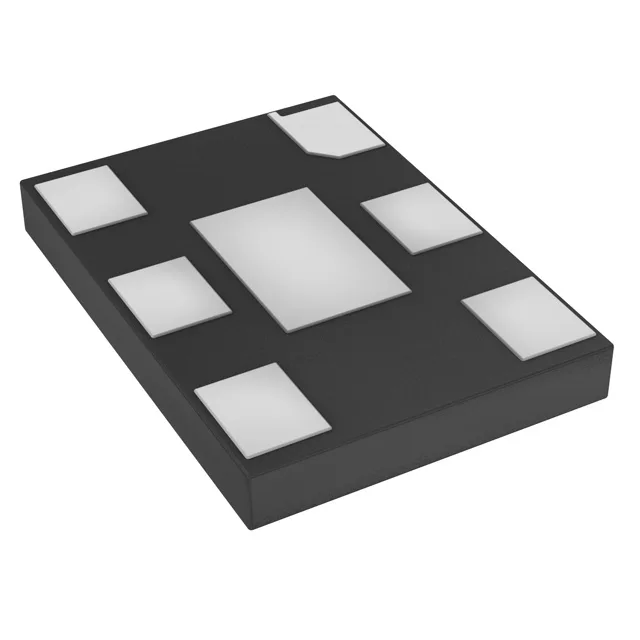
Microchip Technology DSC1121AI2-025.0006T — Crystals & Oscillators

DSC1121AI2-025.0006T Microchip XO Standard 25.0006 MHz MEMS

MPNDSC1121AI2-025.0006T
Active

Microchip DSC1121 series, XO (Standard) MEMS oscillator, 25.0006 MHz, CMOS output, ±25 ppm stability, AEC-Q100 qualified, -40°C to 85°C, 6-SMD package.

Sourced new & surplus through independent channelsAuthenticity-screened · ESD-safe packingListing updated Aug 2026

Specifications

DSC1121AI2-025.0006T specifications
ParameterValue
TypeXO (Standard)
SeriesDSC1121
MountingSurface Mount
Voltage2.25V ~ 3.6V
Current - supply35mA
Current - supply (Disable)22mA
Frequency25.0006 MHz
Frequency stability±25ppm
Operating temperature-40°C~85°C
Size (Dimension)0.276\" L x 0.197\" W (7.00mm x 5.00mm)
Height - seated0.035\" (0.90mm)
OutputCMOS
PackageTape & Reel (TR)
RatingsAEC-Q100
FunctionEnable/Disable
Base resonatorMEMS
Case6-SMD, No Lead Exposed Pad

Product details

The DSC1121AI2-025.0006T: This is a Microchip DSC1121 series XO (Standard) oscillator — a MEMS-based clock generator, not a quartz crystal. Supply range spans 2.25V to 3.6V, letting it run off a 2.5V or 3.3V rail without a separate regulator.

AEC-Q100 qualification — the grade that matters

Rated AEC-Q100 — that is automotive IC qualification with the temperature grade, reliability stress, and PPAP documentation a Tier-1 auditor expects. This is a qualified part, not an industrial part sold as automotive-capable.

Housed in a 6-SMD, No Lead Exposed Pad package measuring 7.00mm x 5.00mm x 0.90mm. The 0.90mm seated height keeps it low-profile for mezzanine or stacked-board assemblies.

Frequently asked questions

What is the exact frequency of DSC1121AI2-025.0006T?

25.0006 MHz. The fractional offset from 25.0000 MHz is intentional — some Ethernet PHYs and USB hubs specify 25.0006 MHz as the reference frequency. Confirm your PLL or clock tree's tolerance before substituting a standard 25.0000 MHz oscillator.

Is DSC1121AI2-025.0006T a direct replacement for a quartz crystal oscillator?

Functionally yes — it is an XO (Standard) that outputs a CMOS clock at the specified frequency. The key difference is the MEMS base resonator: MEMS oscillators typically offer better shock and vibration tolerance, faster startup, and lower aging drift than quartz. However, the pinout and footprint differ from a typical quartz crystal — verify the 6-SMD, No Lead Exposed Pad package matches your PCB land pattern before substituting.

What is the frequency stability of DSC1121AI2-025.0006T?

This is a tight enough window for most automotive and industrial timing applications — a 25.0006 MHz clock with ±25 ppm drifts less than 630 Hz at the extremes, which is within the capture range of most PLLs.

Does DSC1121AI2-025.0006T have an Enable/Disable function?

Yes, the part includes an Enable/Disable pin. When disabled, the supply current drops to 22 mA max — useful for power-save modes in battery-backed or low-quiescent systems. The pin is active-high by default on this family; confirm the logic polarity from the DSC1121 datasheet.