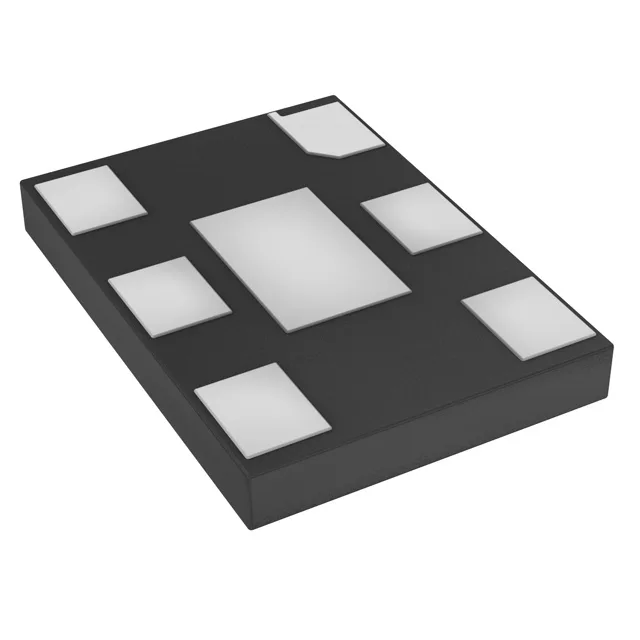
Microchip Technology DSC1121AI2-025.0000T — Crystals & Oscillators

DSC1121AI2-025.0000T MEMS XO 25 MHz CMOS AEC-Q100

MPNDSC1121AI2-025.0000T
Active

Microchip DSC1121AI2-025.0000T, XO (Standard), 25 MHz, CMOS output, MEMS resonator, AEC-Q100, 6-SMD package, ±25 ppm stability, 2.25V–3.6V supply, -40°C to 85°C.

$1.4100Ref. price · indicative, final on quote
Sourced new & surplus through independent channelsAuthenticity-screened · ESD-safe packingListing updated Aug 2026

Specifications

DSC1121AI2-025.0000T specifications
ParameterValue
TypeXO (Standard)
SeriesDSC1121
MountingSurface Mount
Voltage2.25V ~ 3.6V
Current - supply35mA
Current - supply (Disable)22mA
Frequency25 MHz
Frequency stability±25ppm
Operating temperature-40°C~85°C
Size (Dimension)0.276\" L x 0.197\" W (7.00mm x 5.00mm)
Height - seated0.035\" (0.90mm)
OutputCMOS
PackageTape & Reel (TR)
RatingsAEC-Q100
FunctionEnable/Disable
Base resonatorMEMS
Case6-SMD, No Lead Exposed Pad

Product details

The MEMS resonator is sealed in the package, so it handles vibration and shock better than a quartz can in an automotive or industrial environment.

AEC-Q100 qualification and supply-voltage range

Supply voltage spans 2.25V to 3.6V, which covers 2.5V and 3.3V logic rails without an external regulator.

Frequently asked questions

What is the output type of DSC1121AI2-025.0000T?

CMOS output — it drives standard digital logic inputs directly without external termination or level translation.

Can DSC1121AI2-025.0000T replace a failed 25 MHz quartz oscillator?

Yes, if the original was a 25 MHz CMOS-output oscillator in a 7.0 x 5.0 mm 6-pin SMD package with a 2.25V–3.6V supply. The MEMS-based part is a drop-in replacement, no board changes needed.

What is the difference between MEMS and quartz oscillators?

MEMS oscillators use a silicon micro-electromechanical resonator instead of a quartz crystal. They are more resistant to vibration and shock, have shorter startup times, and typically offer tighter frequency stability over temperature without the need for external load capacitors.

What does the Enable/Disable function do on the DSC1121?

When the enable pin is pulled low, the output is tri-stated (high-impedance) and the core current drops to a maximum of 22 mA — useful for power gating the clock in sleep modes.