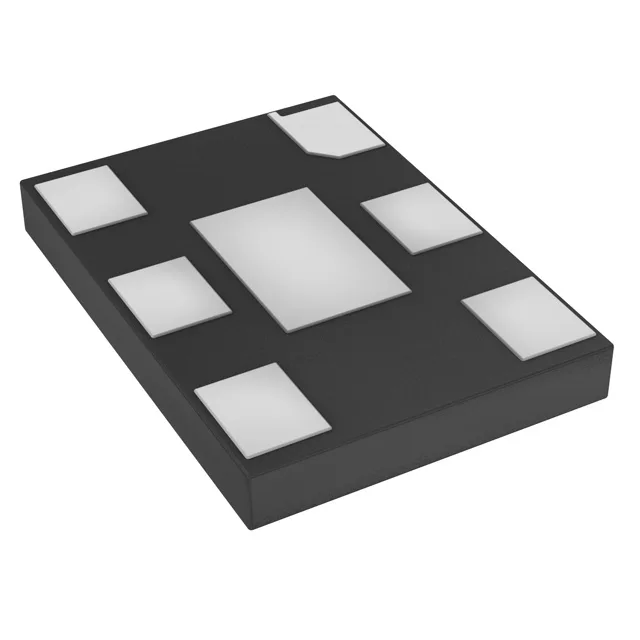
Microchip Technology DSC1121AI1-100.0000T — Crystals & Oscillators

DSC1121AI1-100.0000T MEMS XO 100 MHz CMOS - Microchip

MPNDSC1121AI1-100.0000T
Active

Microchip Technology DSC1121AI1-100.0000T, XO (Standard) MEMS oscillator, 100 MHz CMOS output, ±50 ppm stability, 6-VDFN exposed pad, -40°C to 85°C, active production.

Sourced new & surplus through independent channelsAuthenticity-screened · ESD-safe packingListing updated Aug 2026

Specifications

DSC1121AI1-100.0000T specifications
ParameterValue
TypeXO (Standard)
SeriesDSC1121
MountingSurface Mount
Voltage2.25V ~ 3.6V
Current - supply35mA
Current - supply (Disable)22mA
Frequency100 MHz
Frequency stability±50ppm
Operating temperature-40°C~85°C
Size (Dimension)0.276\" L x 0.197\" W (7.00mm x 5.00mm)
Height - seated0.035\" (0.90mm)
OutputCMOS
PackageTape & Reel (TR)
FunctionEnable/Disable
Base resonatorMEMS
Case6-VDFN Exposed Pad

Product details

MEMS clock for 100 MHz reference rails

Supply voltage and output compatibility

The supply voltage spans 2.25V to 3.6V, so the oscillator runs directly from a 2.5V or 3.3V rail without an external LDO. The CMOS output swings rail-to-rail, which means it drives standard logic inputs (3.3V LVCMOS, 2.5V HSTL) with no level translation.

Package and board layout notes

The 6-VDFN exposed-pad package measures 7.00mm x 5.00mm with a seated height of 0.90mm.

Frequently asked questions

Is the DSC1121AI1-100.0000T compatible with a 3.3V supply?

Yes. The supply voltage range of 2.25V to 3.6V includes 3.3V directly. The CMOS output at 3.3V swings rail-to-rail, so it drives 3.3V LVCMOS logic inputs without a level shifter.

Are there pin-compatible alternatives to the DSC1121AI1-100.0000T?

Within Microchip's DSC1121 series, other frequency variants (e.g., 125 MHz, 50 MHz) share the same 6-VDFN package and pinout. For a direct 100 MHz replacement from another manufacturer, the MEMS-based SiTime SiT8208 series offers a similar footprint and electrical characteristics — confirm the Enable/Disable logic polarity and supply voltage range before substituting.