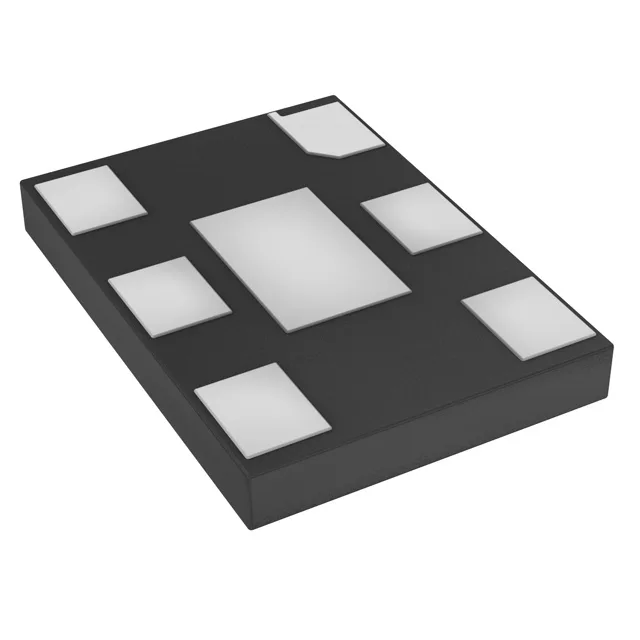
Microchip Technology DSC1121AE2-025.0000 — Crystals & Oscillators

DSC1121AE2-025.0000 MEMS XO – 25 MHz, CMOS, AEC-Q100, Active

MPNDSC1121AE2-025.0000
Active

Microchip DSC1121AE2-025.0000, 25 MHz MEMS XO, CMOS output, ±25 ppm stability, 2.25-3.6V supply, AEC-Q100 qualified, 6-SMD package.

$1.0500Ref. price · indicative, final on quote
Sourced new & surplus through independent channelsAuthenticity-screened · ESD-safe packingListing updated Aug 2026

Specifications

DSC1121AE2-025.0000 specifications
ParameterValue
TypeXO (Standard)
SeriesDSC1121
MountingSurface Mount
Voltage2.25V ~ 3.6V
Current - supply35mA
Current - supply (Disable)22mA
Frequency25 MHz
Frequency stability±25ppm
Operating temperature-20°C~70°C
Size (Dimension)0.276\" L x 0.197\" W (7.00mm x 5.00mm)
Height - seated0.035\" (0.90mm)
OutputCMOS
PackageTube
RatingsAEC-Q100
FunctionEnable/Disable
Base resonatorMEMS
Case6-SMD, No Lead Exposed Pad

Product details

25 MHz MEMS XO with AEC-Q100 qualification

The DSC1121AE2-025.0000 is a 25 MHz MEMS-based XO (standard oscillator) from Microchip's DSC1121 series, delivering a CMOS output with ±25 ppm frequency stability across -20°C to +70°C. Its AEC-Q100 rating qualifies it for automotive applications where the oscillator must survive the temperature and vibration profile of an engine bay or cabin module.

Supply voltage flexibility and enable/disable function

The 2.25V to 3.6V supply range lets it run directly from a 2.5V or 3.3V rail without an extra LDO, simplifying the power tree. The enable/disable function allows the output to be tri-stated, pulling only 22 µA max when disabled — useful for power-gated subsystems in battery-backed or sleep-mode designs.

Frequently asked questions

Is the DSC1121AE2-025.0000 AEC-Q100 qualified?

Yes, it carries AEC-Q100 rating, making it suitable for automotive-grade applications where the oscillator must meet the reliability and temperature requirements of the automotive electronics council.

What is the output type of this oscillator?

The output is CMOS, which interfaces directly with most MCU and SoC clock inputs without additional level translation.