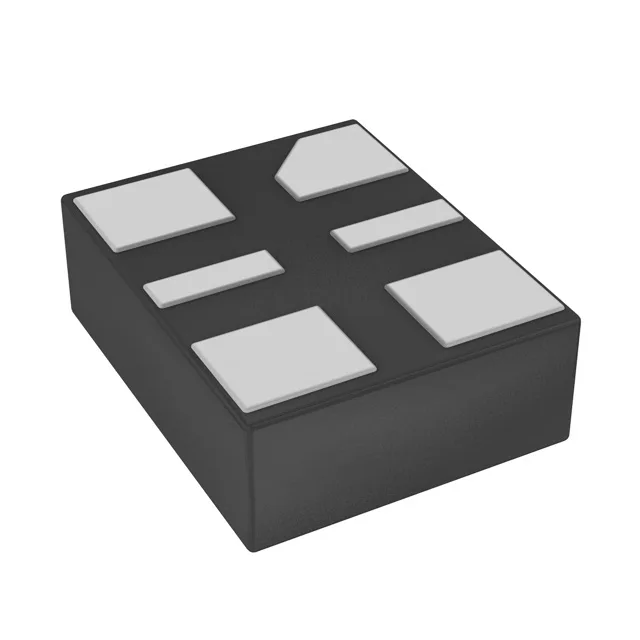
Microchip Technology DSC1104DL5-040.0000 — Crystals & Oscillators

DSC1104DL5-040.0000 MEMS XO, 40 MHz HCSL, -40°C to 105°C

MPNDSC1104DL5-040.0000
Active

Microchip DSC1104DL5-040.0000, XO (Standard), 40 MHz, HCSL output, ±10 ppm stability, 2.25V–3.6V supply, Standby (Power Down) function, -40°C to 105°C, 6-SMD No Lead, MEMS resonator.

Independent supplier — new & surplus stockAuthenticity-screened · ESD-safe packingListing updated Aug 2026

Specifications

DSC1104DL5-040.0000 specifications
ParameterValue
TypeXO (Standard)
SeriesDSC1104
MountingSurface Mount
Supply voltage2.25V ~ 3.6V
Current - supply42mA
Current - supply (Disable)95µA
Frequency40 MHz
Frequency stability±10ppm
Operating temperature-40°C~105°C
Size (Dimension)0.098\" L x 0.079\" W (2.50mm x 2.00mm)
Height - seated0.035\" (0.90mm)
OutputHCSL
PackageTube
FunctionStandby (Power Down)
Base resonatorMEMS
Case6-SMD, No Lead

Product details

40 MHz HCSL clock with industrial temperature range

The DSC1104DL5-040.0000 is a 40 MHz MEMS-based XO delivering an HCSL differential output — the same signal standard used in PCIe reference clocks and high-speed SerDes. Supply voltage spans 2.25V to 3.6V, covering 2.5V and 3.3V rails without an external regulator.

The 6-SMD, No Lead package measures 2.50 mm x 2.00 mm with a seated height of 0.90 mm — a compact footprint that fits tight channel spacing on multi-lane clock trees.

Frequently asked questions

Does DSC1104DL5-040.0000 support standby (power down) mode with HCSL output?

Yes — the standby (power down) function is built in. When the enable pin is de-asserted, the output is disabled and the supply current drops to 95 µA max. The HCSL output is high-impedance in standby, so it does not load the clock bus.

Is DSC1104DL5-040.0000 a direct replacement for older quartz oscillators?

Functionally yes — it is a drop-in XO replacement for a 40 MHz HCSL clock. The MEMS resonator is more shock and vibration tolerant than quartz, and the 2.50 mm x 2.00 mm package is smaller than many legacy quartz footprints. Verify the pinout and enable logic against your existing quartz oscillator before committing the BOM.