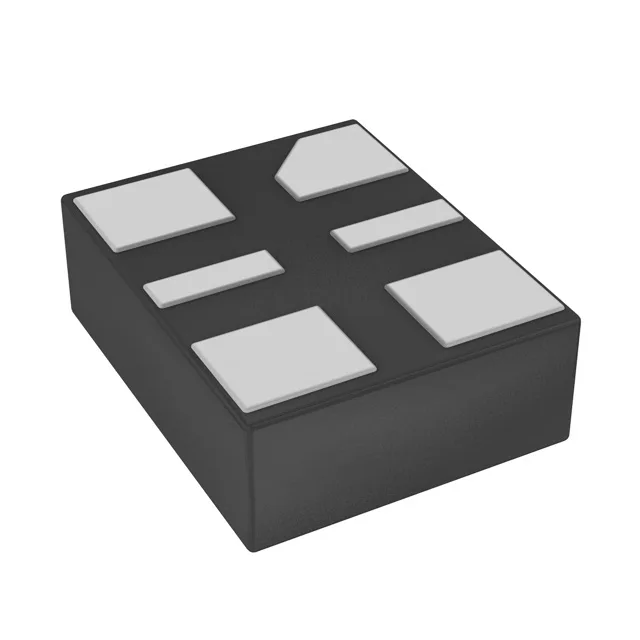
Microchip Technology DSC1104DE1-125.0000 — Crystals & Oscillators

DSC1104DE1-125.0000 – Microchip MEMS XO, 125 MHz, HCSL

MPNDSC1104DE1-125.0000
Active

Microchip Technology DSC1104 series, XO (Standard) MEMS oscillator, 125 MHz, HCSL output, ±50 ppm stability, 2.25V~3.6V supply, standby (power down) function, 6-SMD no-lead package.

Independent supplier — new & surplus stockAuthenticity-screened · ESD-safe packingListing updated Aug 2026

Specifications

DSC1104DE1-125.0000 specifications
ParameterValue
TypeXO (Standard)
SeriesDSC1104
MountingSurface Mount
Supply voltage2.25V ~ 3.6V
Current - supply42mA
Current - supply (Disable)95µA
Frequency125 MHz
Frequency stability±50ppm
Operating temperature-20°C~70°C
Size (Dimension)0.098\" L x 0.079\" W (2.50mm x 2.00mm)
Height - seated0.035\" (0.90mm)
OutputHCSL
PackageTube
FunctionStandby (Power Down)
Base resonatorMEMS
Case6-SMD, No Lead

Product details

125 MHz HCSL MEMS oscillator with standby

The wide supply range of 2.25 V to 3.6 V means the same part works across 2.5 V and 3.3 V rails without a separate LDO.

The 6-SMD no-lead package (2.50 mm × 2.00 mm, 0.90 mm seated height) is a standard MEMS oscillator footprint compatible with reflow soldering.

Frequently asked questions

What is the exact frequency and output type of DSC1104DE1-125.0000?

The DSC1104DE1-125.0000 is a 125 MHz XO (Standard) oscillator with an HCSL output. HCSL is a differential current-steering logic level commonly used for PCIe reference clocks.

Does DSC1104DE1-125.0000 have a standby power-down function and how is it controlled?

Yes, the part includes a standby (power down) function. When the enable pin is pulled low, the oscillator enters standby and draws 95 µA max. Pulling the pin high returns the output to the active 125 MHz clock.

Can DSC1104DE1-125.0000 replace a standard quartz crystal oscillator?

Yes, it is a drop-in replacement for a quartz XO in the same 6-SMD footprint, with the added benefits of MEMS reliability and a standby function. The HCSL output, however, is differential — if the original design used a single-ended CMOS oscillator, the receiver must accept HCSL levels.