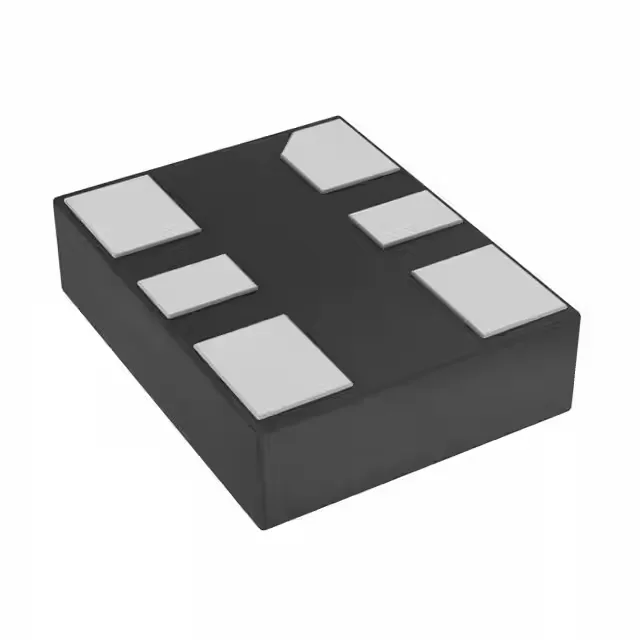
Microchip Technology DSC1104CI2-100.0000 — Crystals & Oscillators

DSC1104CI2-100.0000 MEMS XO, 100 MHz HCSL, -40 to 85°C

MPNDSC1104CI2-100.0000
Active

Microchip Technology DSC1104CI2-100.0000, XO (Standard) MEMS oscillator, 100 MHz HCSL output, ±25 ppm stability, 2.25V–3.6V supply, -40°C to 85°C, 6-SMD no-lead package.

$3.2250Ref. price · indicative, final on quote
Sourced new & surplus through independent channelsAuthenticity-screened · ESD-safe packingListing updated Aug 2026

Specifications

DSC1104CI2-100.0000 specifications
ParameterValue
TypeXO (Standard)
SeriesDSC1104
MountingSurface Mount
Voltage2.25V ~ 3.6V
Current - supply42mA
Current - supply (Disable)95µA
Frequency100 MHz
Frequency stability±25ppm
Operating temperature-40°C~85°C
Size (Dimension)0.126\" L x 0.098\" W (3.20mm x 2.50mm)
Height - seated0.035\" (0.90mm)
OutputHCSL
PackageTube
FunctionStandby (Power Down)
Base resonatorMEMS
Case6-SMD, No Lead

Product details

100 MHz HCSL clock from a MEMS resonator

The HCSL output is the differential signalling standard used for PCIe reference clocks and Ethernet PHY reference inputs; it swings 700–900 mV peak-to-peak into a 50-Ω terminated pair, which means it drives a differential line directly without an external level translator. Supply voltage spans 2.25V to 3.6V, so the same BOM line works on a 2.5V or 3.3V rail — no extra regulator needed. The ±25 ppm frequency stability covers temperature, supply, and ageing combined, which is tight enough for most 1000BASE-T Ethernet and PCIe Gen 1/2/3 reference clock jitter budgets without stepping up to a TCXO.

Standby power-down for intermittent duty

The 42 mA max active draw is typical for a 100 MHz HCSL oscillator; the differential output stage accounts for most of it, so the current is fairly independent of the load capacitance.

Frequently asked questions

What is the output type and frequency stability of the DSC1104CI2-100.0000?

The output is HCSL (High-Speed Current Steering Logic), a differential standard used for PCIe and Ethernet reference clocks. Frequency stability is ±25 ppm across temperature, supply, and ageing.