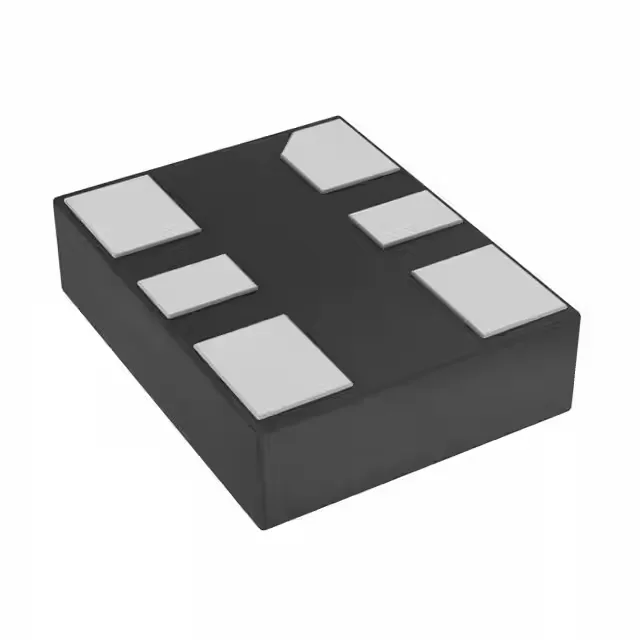
Microchip Technology DSC1104CE1-100.0000 — Crystals & Oscillators

DSC1104CE1-100.0000 – 100 MHz MEMS XO, HCSL, Active

MPNDSC1104CE1-100.0000
Active

Microchip DSC1104CE1-100.0000, XO (Standard) type, 100 MHz HCSL output, MEMS resonator, ±50 ppm stability, 2.25V–3.6V supply, -20°C to 70°C, 6-SMD package.

Independent supplier — new & surplus stockAuthenticity-screened · ESD-safe packingListing updated Aug 2026

Specifications

DSC1104CE1-100.0000 specifications
ParameterValue
TypeXO (Standard)
SeriesDSC1104
MountingSurface Mount
Supply voltage2.25V ~ 3.6V
Current - supply42mA
Current - supply (Disable)95µA
Frequency100 MHz
Frequency stability±50ppm
Operating temperature-20°C~70°C
Size (Dimension)0.126\" L x 0.098\" W (3.20mm x 2.50mm)
Height - seated0.035\" (0.90mm)
OutputHCSL
PackageTube
FunctionStandby (Power Down)
Base resonatorMEMS
Case6-SMD, No Lead

Product details

100 MHz HCSL clock source with MEMS reliability

The HCSL output is the common clock format for PCIe reference clocks and high-speed serial interfaces, making this a direct fit for server, networking, and FPGA-based designs that require a clean 100 MHz differential clock.

Standby mode and supply flexibility

This allows the system to shut down the clock tree when the associated logic is idle, saving power in battery-powered or thermally constrained designs. The supply voltage range of 2.25V to 3.6V covers common 2.5V and 3.3V rails without an external regulator. The 6-SMD, no-lead package (3.20mm x 2.50mm) is a standard MEMS oscillator footprint, compatible with many existing XO layouts.

Frequently asked questions

What is the DSC1104CE1-100.0000's output type and why does it matter?

The output is HCSL (High-Speed Current Steering Logic), which is the standard clock format for PCIe reference clocks and many high-speed serial interfaces. It provides a differential signal with controlled swing that meets PCIe jitter requirements without external termination resistors.

Can the DSC1104CE1-100.0000 replace a standard quartz crystal oscillator?

Yes, if the board is laid out for a 6-SMD MEMS oscillator footprint and the supply voltage is within 2.25V–3.6V. The MEMS resonator gives faster startup and better shock tolerance than quartz, but the electrical interface (HCSL output, 100 MHz frequency) is the same as a quartz-based XO with the same output type.