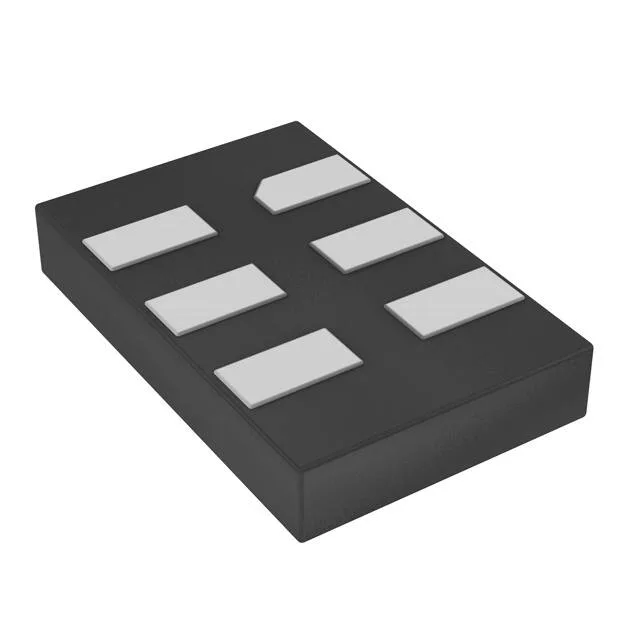
Selection mistake this part avoids
A 100 MHz HCSL clock is the standard reference for PCIe Gen1/2/3 interfaces. Using a quartz oscillator here means you carry the risk of quartz supply allocation and longer start-up time—the MEMS resonator in this DSC1104BI2-100.0000 eliminates that exposure while delivering the same ±25 ppm stability across -40°C to 85°C. The wide supply range (2.25V to 3.6V) lets you drop this onto either a 2.5V or 3.3V rail without a separate LDO—one less part to qualify.
HCSL output and termination
HCSL is a differential, open-emitter output requiring a pull-up to ground on each leg. The 100 MHz output drives the typical differential termination directly.
MEMS vs quartz: sourcing reality
MEMS oscillators have a shorter, more predictable lead time than quartz because the resonator is a semiconductor fab process, not a crystal blank—no quartz supply constraints. The 6-SMD, No Lead package (5.00mm x 3.20mm, 0.90mm seated height) is a standard footprint shared by many MEMS and quartz XOs; a board designed for a quartz 5.0x3.2mm oscillator will accept this part without layout changes.