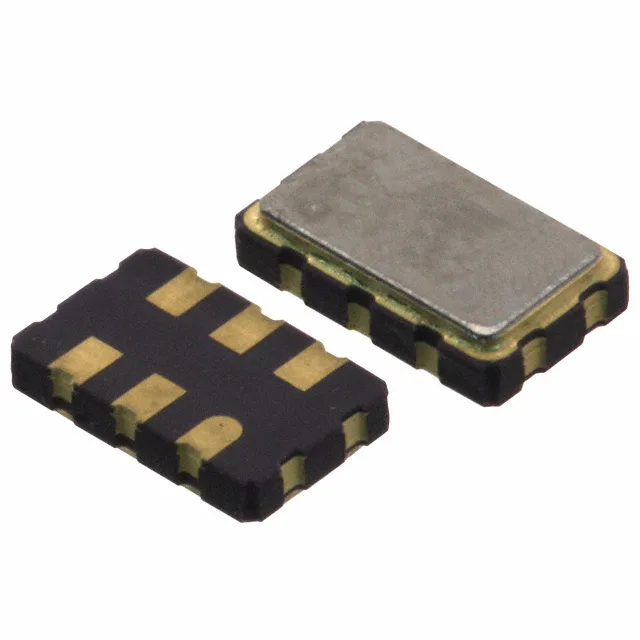
Microchip Technology DSC1103NI5-300.0000 — Crystals & Oscillators

DSC1103NI5-300.0000 300 MHz LVDS MEMS Oscillator – Microchip

MPNDSC1103NI5-300.0000
Active

Microchip DSC1103NI5-300.0000, XO (Standard) MEMS oscillator, 300 MHz LVDS output, ±10 ppm stability, -40 to 85°C, 6-SMD no-lead package, 2.25–3.63 V supply

Independent supplier — new & surplus stockAuthenticity-screened · ESD-safe packingListing updated Aug 2026

Specifications

DSC1103NI5-300.0000 specifications
ParameterValue
TypeXO (Standard)
SeriesDSC1103
MountingSurface Mount
Supply voltage2.25V ~ 3.63V
Current - supply32mA
Current - supply (Disable)95µA
Frequency300 MHz
Frequency stability±10ppm
Operating temperature-40°C~85°C
Size (Dimension)0.276\" L x 0.197\" W (7.00mm x 5.00mm)
Height - seated0.035\" (0.90mm)
OutputLVDS
PackageTube
FunctionStandby (Power Down)
Base resonatorMEMS
Case6-SMD, No Lead

Product details

300 MHz LVDS MEMS oscillator – what it replaces and where it fits

It directly replaces a quartz oscillator in the same 6-SMD, no-lead footprint (7.0×5.0 mm) while offering tighter stability and lower sensitivity to vibration and aging. The 2.25–3.63 V supply range lets it share a 3.3 V or 2.5 V rail without a dedicated LDO. LVDS output provides the low-jitter, differential signal needed for 300 MHz clock distribution to FPGAs, SerDes, and Ethernet PHYs.

Active production – no LTB scramble needed

Microchip lists the DSC1103NI5-300.0000 as Active. Availability and lead time confirmed at RFQ.

Standby power-down and supply tolerance

Active current draw is 32 mA max at 300 MHz—typical for a high-speed LVDS oscillator in this package class.

Frequently asked questions

How can I order the DSC1103NI5-300.0000 or check availability?

Submit an RFQ for current pricing and lead-time confirmation.

Can the DSC1103NI5-300.0000 replace a standard quartz oscillator?

Yes. The DSC1103NI5-300.0000 is a MEMS-based XO (Standard) that fits the same 6-SMD, no-lead footprint (7.0×5.0 mm) as many quartz oscillators. It offers ±10 ppm stability over -40 to 85°C, LVDS output at 300 MHz, and a wide 2.25–3.63 V supply range—typically tighter stability and better vibration immunity than a quartz equivalent.