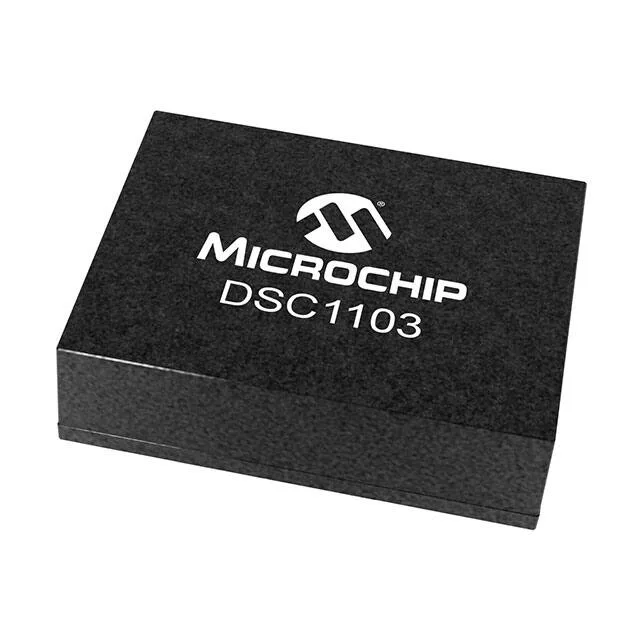
Microchip Technology DSC1103CL5-135.0000T — Crystals & Oscillators

DSC1103CL5-135.0000T 135 MHz LVDS MEMS XO - Microchip

MPNDSC1103CL5-135.0000T
Active

Microchip DSC1103 series, XO (Standard) MEMS oscillator, 135 MHz LVDS output, ±10 ppm stability, 2.25 V ~ 3.63 V supply, -40°C ~ 105°C, 6-SMD no lead package, Standby (Power Down) function.

Independent supplier — new & surplus stockAuthenticity-screened · ESD-safe packingListing updated Aug 2026

Specifications

DSC1103CL5-135.0000T specifications
ParameterValue
TypeXO (Standard)
SeriesDSC1103
MountingSurface Mount
Supply voltage2.25V ~ 3.63V
Current - supply32mA
Current - supply (Disable)95µA
Frequency135 MHz
Frequency stability±10ppm
Operating temperature-40°C~105°C
Size (Dimension)0.126\" L x 0.098\" W (3.20mm x 2.50mm)
Height - seated0.035\" (0.90mm)
OutputLVDS
PackageTape & Reel (TR)
FunctionStandby (Power Down)
Base resonatorMEMS
Case6-SMD, No Lead

Product details

The DSC1103CL5-135.0000T: Supply voltage spans 2.25 V to 3.63 V, covering 2.5 V and 3.3 V rails without a separate regulator — one BOM line serves both power domains.

Housed in a 6-SMD, No Lead package measuring 3.20 mm x 2.50 mm with a seated height of 0.90 mm — a compact footprint that fits tight channel spacing on multi-gigabit SERDES boards.

Frequently asked questions

Is the DSC1103CL5-135.0000T RoHS compliant?

RoHS compliance is standard for Microchip's DSC1103 series; the product status is Active and no non-compliant variants are listed.

Is the DSC1103CL5-135.0000T equivalent to the DSC1103CL1-135.0000T?

Both share the same DSC1103 series, 135 MHz frequency, and LVDS output. The suffix difference (CL5 vs CL1) indicates a different frequency stability or temperature grade option; confirm the stability and temperature range required for your application before substituting.

What is the output type of the DSC1103CL5-135.0000T?

LVDS — low-voltage differential signaling. The differential pair provides better noise immunity and lower EMI than single-ended outputs at 135 MHz, especially over longer PCB traces.