160 MHz LVDS clock source with MEMS resonator
Supply-range flexibility and standby current
The supply voltage spans 2.25 V to 3.63 V, covering the common 2.5 V and 3.3 V logic rails without an external LDO.
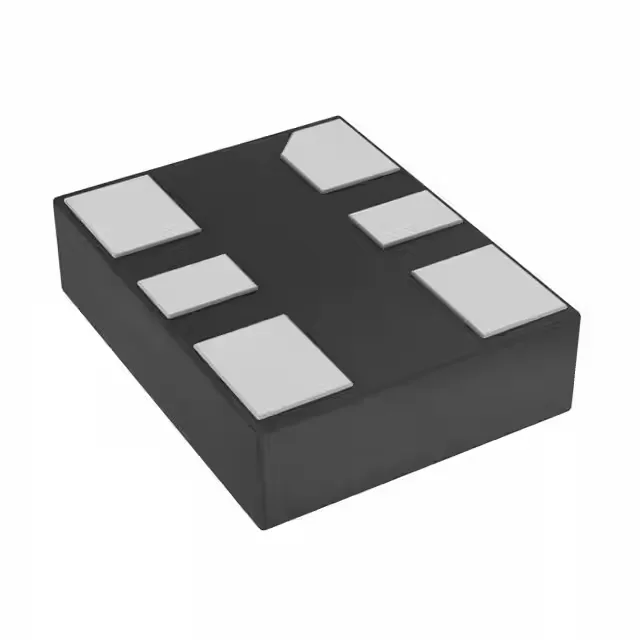
Microchip DSC1103CI2-160.0000, XO (Standard), 160 MHz LVDS output, MEMS resonator, ±25 ppm stability, -40 to 85°C, 6-SMD no-lead package, standby power-down function.
| Parameter | Value |
|---|---|
| Type | XO (Standard) |
| Series | DSC1103 |
| Mounting | Surface Mount |
| Voltage | 2.25V ~ 3.63V |
| Current - supply | 32mA |
| Current - supply (Disable) | 95µA |
| Frequency | 160 MHz |
| Frequency stability | ±25ppm |
| Operating temperature | -40°C~85°C |
| Size (Dimension) | 0.126\" L x 0.098\" W (3.20mm x 2.50mm) |
| Height - seated | 0.035\" (0.90mm) |
| Output | LVDS |
| Package | Tube |
| Function | Standby (Power Down) |
| Base resonator | MEMS |
| Case | 6-SMD, No Lead |
The supply voltage spans 2.25 V to 3.63 V, covering the common 2.5 V and 3.3 V logic rails without an external LDO.
That stability includes the combined effects of temperature, supply voltage variation, and aging — a single number that defines the timing budget for the serial link or FPGA reference it drives.
LVDS (Low-Voltage Differential Signaling). The differential output provides better noise immunity than a single-ended CMOS clock, especially over long PCB traces or through a connector. The LVDS swing also reduces radiated emissions compared to a 3.3 V CMOS clock at 160 MHz.
Within the same DSC1103 series, any frequency variant shares the same 6-SMD no-lead footprint and pinout — the base product number DSC1103 covers the family. For a different output type (e.g., HCSL or LVPECL), the DSC11xx series uses a similar package but the output standard changes the termination scheme on the board. Confirm the output type and frequency before cross-referencing.