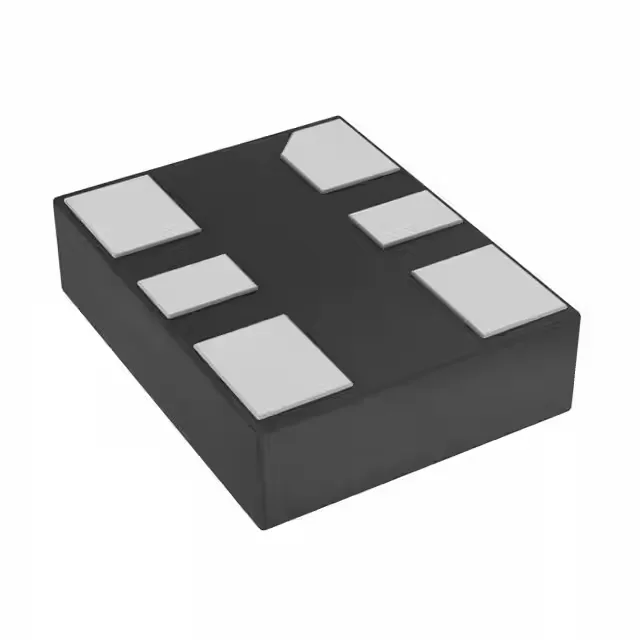
Microchip Technology DSC1103CE1-148.5000 — Crystals & Oscillators

DSC1103CE1-148.5000 MEMS XO, 148.5 MHz LVDS, Active

MPNDSC1103CE1-148.5000
Active

Microchip DSC1103CE1-148.5000, XO (Standard) MEMS oscillator, 148.5 MHz LVDS output, 2.25V–3.63V supply, ±50ppm stability, -20°C to 70°C, 6-SMD package.

Sourced new & surplus through independent channelsAuthenticity-screened · ESD-safe packingListing updated Aug 2026

Specifications

DSC1103CE1-148.5000 specifications
ParameterValue
TypeXO (Standard)
SeriesDSC1103
MountingSurface Mount
Voltage2.25V ~ 3.63V
Current - supply32mA
Current - supply (Disable)95µA
Frequency148.5 MHz
Frequency stability±50ppm
Operating temperature-20°C~70°C
Size (Dimension)0.126\" L x 0.098\" W (3.20mm x 2.50mm)
Height - seated0.035\" (0.90mm)
OutputLVDS
PackageTube
FunctionStandby (Power Down)
Base resonatorMEMS
Case6-SMD, No Lead

Product details

148.5 MHz LVDS clock for video and serial links

The DSC1103CE1-148.5000 is a MEMS-based XO (Standard) oscillator delivering a 148.5 MHz LVDS output — a common reference for 1080p video, 10G Ethernet, and high-speed ADC/DAC clocks. The LVDS differential pair keeps jitter low over short PCB traces, and the 32 mA max supply draw is typical for a 148.5 MHz LVDS oscillator; the standby disable drops it to 95 µA for power-sensitive designs. The supply voltage range of 2.25V to 3.63V covers both 2.5V and 3.3V rails without a separate regulator — useful when the same BOM must work across different processor I/O banks.

The MEMS resonator means the part is not subject to quartz supply constraints; lead times tend to be shorter and more stable than equivalent quartz XOs.

Housed in a 6-SMD, no-lead package measuring 3.20mm x 2.50mm with a seated height of 0.90mm — a standard MEMS oscillator footprint that fits most 6-pin XO land patterns.

Frequently asked questions

What is the output type of DSC1103CE1-148.5000?

The output is LVDS — a differential pair that provides low noise and good common-mode rejection over short PCB traces. It is not single-ended; the receiving device must have an LVDS input buffer.