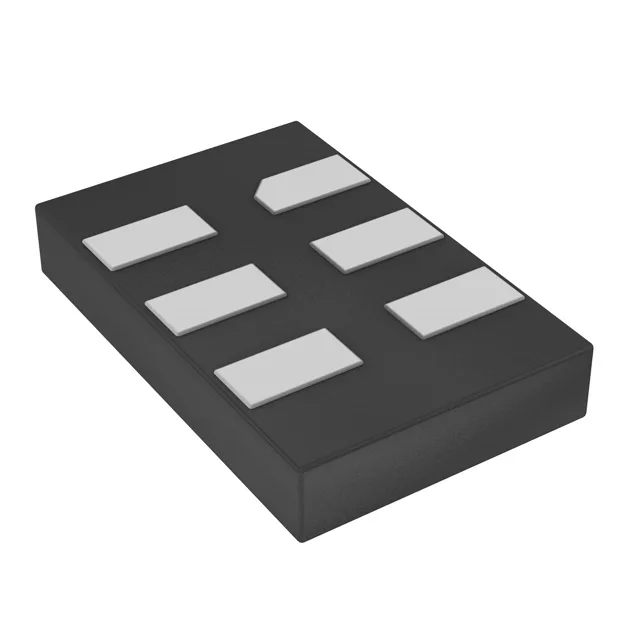
Microchip Technology DSC1103BI2-148.5000 — Crystals & Oscillators

DSC1103BI2-148.5000 LVDS MEMS Oscillator 148.5 MHz ±25 ppm

MPNDSC1103BI2-148.5000
End of Life

Microchip DSC1103BI2-148.5000, XO (Standard) LVDS MEMS oscillator, 148.5 MHz, ±25 ppm stability, 2.25-3.63 V supply, -40 to 85 °C, 6-VDFN package.

$3.2800Ref. price · indicative, final on quote
Independent supplier — new & surplus stockAuthenticity-screened · ESD-safe packingListing updated Aug 2026

Specifications

DSC1103BI2-148.5000 specifications
ParameterValue
TypeXO (Standard)
SeriesDSC1103
MountingSurface Mount
Supply voltage2.25V ~ 3.63V
Current - supply32mA
Current - supply (Disable)95µA
Frequency148.5 MHz
Frequency stability±25ppm
Operating temperature-40°C ~ 85°C
Size (Dimension)0.197\" L x 0.126\" W (5.00mm x 3.20mm)
Height - seated0.035\" (0.90mm)
OutputLVDS
FunctionStandby (Power Down)
PackageTube
Base resonatorMEMS
Case6-VDFN

Product details

The DSC1103BI2-148.5000 is a MEMS-based XO (Standard) oscillator delivering a 148.5 MHz LVDS output — the exact frequency used in 3G-SDI and 1080p video clocking. The LVDS differential pair keeps noise coupled into the clock path low over long PCB traces, which matters when the oscillator sits on a separate board from the FPGA or serializer. The wide tolerance also absorbs ripple from a switching regulator without degrading the ±25 ppm frequency stability.

Industrial temperature range and standby function

For battery-powered equipment that sleeps between transmissions, this saves enough power to extend field life without a separate load switch.

Frequently asked questions

Is the DSC1103BI2-148.5000 compatible with 3.3V logic?

Yes. The supply voltage range of 2.25 V to 3.63 V covers both 2.5 V and 3.3 V rails. The LVDS output is a differential pair that meets the LVDS standard (typical 1.2 V common-mode, 350 mV swing), so it interfaces directly with 3.3 V LVDS receivers without level translation.

What is the frequency stability of the DSC1103BI2-148.5000?

The frequency stability is ±25 ppm over the full operating temperature range and supply voltage variation. For a 148.5 MHz carrier, ±25 ppm corresponds to a maximum frequency error of about 3.7 kHz — well within the tolerance of most video and data-recovery PLLs.