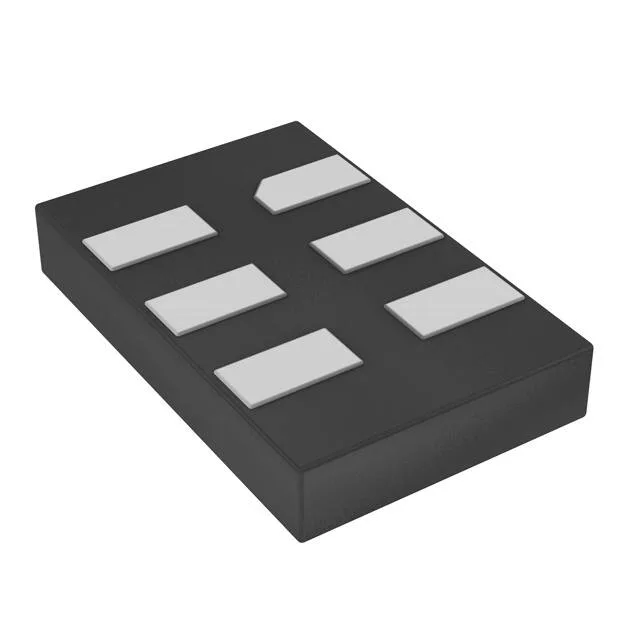
Microchip Technology DSC1103BI1-150.0000 — Crystals & Oscillators

DSC1103BI1-150.0000 MEMS XO, 150 MHz LVDS, Active

MPNDSC1103BI1-150.0000
Active

Microchip DSC1103BI1-150.0000, XO (Standard) MEMS oscillator, 150 MHz LVDS output, ±50 ppm stability, 2.25V–3.63V supply, -40°C to 85°C, 5.0 x 3.2 mm 6-SMD no-lead package.

Independent supplier — new & surplus stockAuthenticity-screened · ESD-safe packingListing updated Aug 2026

Specifications

DSC1103BI1-150.0000 specifications
ParameterValue
TypeXO (Standard)
SeriesDSC1103
MountingSurface Mount
Supply voltage2.25V ~ 3.63V
Current - supply32mA
Current - supply (Disable)95µA
Frequency150 MHz
Frequency stability±50ppm
Operating temperature-40°C~85°C
Size (Dimension)0.197\" L x 0.126\" W (5.00mm x 3.20mm)
Height - seated0.035\" (0.90mm)
OutputLVDS
PackageTube
FunctionStandby (Power Down)
Base resonatorMEMS
Case6-SMD, No Lead

Product details

150 MHz LVDS clock from a MEMS resonator

The MEMS die is sealed in a standard 5.0 x 3.2 mm 6-SMD no-lead package, making it a drop-in replacement for quartz XOs at the same footprint. LVDS output at 150 MHz directly drives high-speed SerDes reference clocks, FPGA gigabit transceivers, and Ethernet PHY MAC interfaces without an external level translator.

The wide tolerance absorbs ±10 % supply variation typical of industrial backplanes. Frequency stability is ±50 ppm over the full temperature range and includes aging — tight enough for 1 GbE and most 10/100/1000BASE-T reference clocks without a TCXO.

Listed as Active by Microchip. No last-time-buy window or NRND flag.

Frequently asked questions

What is the output type of DSC1103BI1-150.0000?

LVDS differential output. The 150 MHz clock is delivered as a low-voltage differential signal, which rejects common-mode noise and keeps the edge rate clean over short PCB traces to the receiver.

Is DSC1103BI1-150.0000 compatible with 3.3V?

Yes. The supply range is 2.25 V to 3.63 V, so a 3.3 V rail is within spec. The LVDS output swing is independent of the supply voltage and remains within the LVDS standard levels.

What is the difference between DSC1103BI1-150.0000 and DSC1123BI1-150.0000?

The DSC1123 series uses an LVPECL output, while the DSC1103 series uses LVDS. Both run at 150 MHz and share the same 5.0 x 3.2 mm footprint and pinout — the choice depends on the receiver's input logic standard.