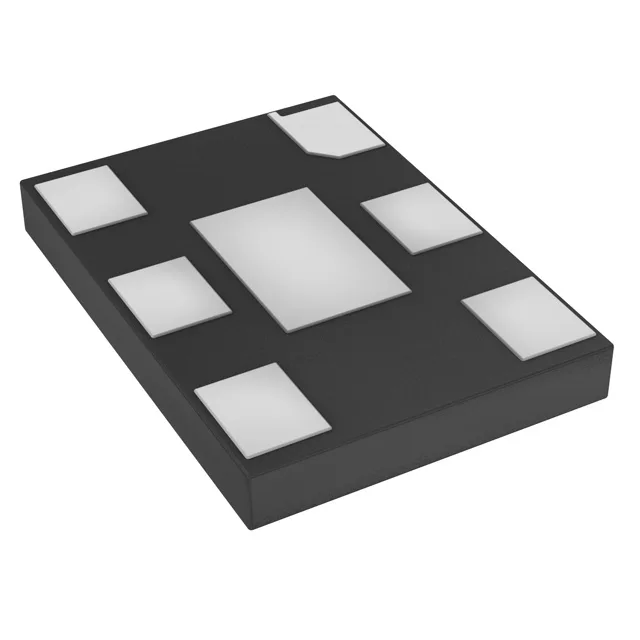
Microchip Technology DSC1103AI5-156.2500 — Crystals & Oscillators

DSC1103AI5-156.2500 – 156.25 MHz LVDS MEMS Oscillator

MPNDSC1103AI5-156.2500
Active

Microchip Technology DSC1103AI5-156.2500, XO (Standard) MEMS oscillator, LVDS output, 156.25 MHz, ±10 ppm stability, 2.25V–3.63V supply, -40°C to 85°C, 6-SMD package.

$3.8550Ref. price · indicative, final on quote
Sourced new & surplus through independent channelsAuthenticity-screened · ESD-safe packingListing updated Aug 2026

Specifications

DSC1103AI5-156.2500 specifications
ParameterValue
TypeXO (Standard)
SeriesDSC1103
MountingSurface Mount
Voltage2.25V ~ 3.63V
Current - supply32mA
Current - supply (Disable)95µA
Frequency156.25 MHz
Frequency stability±10ppm
Operating temperature-40°C~85°C
Size (Dimension)0.276\" L x 0.197\" W (7.00mm x 5.00mm)
Height - seated0.035\" (0.90mm)
OutputLVDS
PackageTube
FunctionStandby (Power Down)
Base resonatorMEMS
Case6-SMD, No Lead Exposed Pad

Product details

156.25 MHz LVDS MEMS oscillator – active, industrial temp

Supply voltage spans 2.25V to 3.63V, drawing 32 mA max during operation and dropping to 95 µA in standby (power-down) mode, making it suitable for power-sensitive or intermittent-duty designs. The MEMS base resonator provides faster startup and better shock/vibration tolerance than quartz, a practical advantage in industrial, telecom, and outdoor equipment where mechanical stress is a concern.

Standby function and supply flexibility

The standby (power down) function disables the output and drops current consumption to 95 µA max, allowing the oscillator to be gated off during system sleep without removing the supply rail. The wide 2.25V–3.63V supply range covers common 2.5V and 3.3V rails, simplifying integration without an external LDO.

Frequently asked questions

What is the difference between a MEMS oscillator and a crystal oscillator?

A MEMS oscillator uses a silicon micro-electromechanical resonator instead of a quartz crystal. The DSC1103AI5-156.2500's MEMS base offers faster startup, better shock/vibration tolerance, and typically wider frequency stability over temperature compared to a basic quartz XO, though quartz still dominates for ultra-low phase-noise requirements.