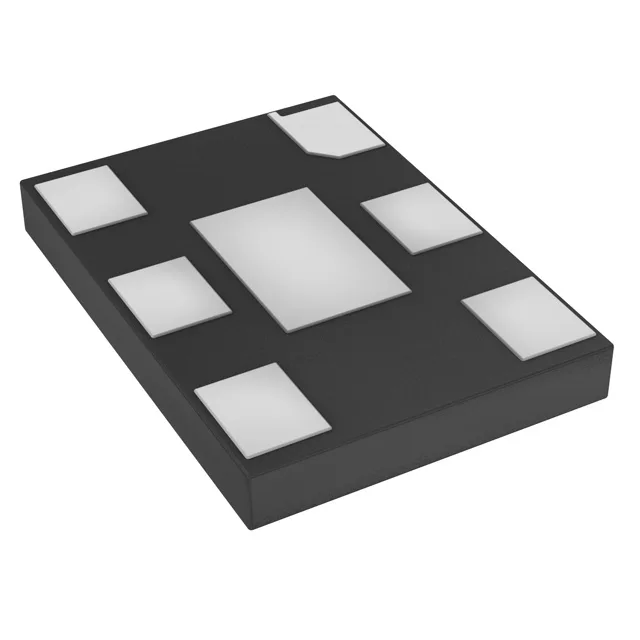
Microchip Technology DSC1103AI2-171.8181T — Crystals & Oscillators

DSC1103AI2-171.8181T MEMS LVDS Oscillator 171.8181 MHz -

MPNDSC1103AI2-171.8181T
Active

Microchip Technology DSC1103AI2-171.8181T, MEMS-based XO (Standard), LVDS output, 171.8181 MHz, ±25 ppm stability, -40°C to 85°C, 6-SMD package.

Sourced new & surplus through independent channelsAuthenticity-screened · ESD-safe packingListing updated Aug 2026

Specifications

DSC1103AI2-171.8181T specifications
ParameterValue
TypeXO (Standard)
SeriesDSC1103
MountingSurface Mount
Voltage2.25V ~ 3.63V
Current - supply32mA
Current - supply (Disable)95µA
Frequency171.8181 MHz
Frequency stability±25ppm
Operating temperature-40°C~85°C
Size (Dimension)0.276\" L x 0.197\" W (7.00mm x 5.00mm)
Height - seated0.035\" (0.90mm)
OutputLVDS
PackageTape & Reel (TR)
FunctionStandby (Power Down)
Base resonatorMEMS
Case6-SMD, No Lead Exposed Pad

Product details

MEMS oscillator at 171.8181 MHz with LVDS output

The DSC1103AI2-171.8181T is a MEMS-based XO (Standard) from Microchip's DSC1103 series, delivering a 171.8181 MHz LVDS clock output. The MEMS resonator replaces the quartz crystal, offering better shock and vibration tolerance — a real advantage in industrial or portable gear where quartz can drift or fail under mechanical stress.

Industrial temperature grade and supply range

The supply voltage spans 2.25V to 3.63V, covering common 2.5V and 3.3V rails without a separate regulator.

Standby function and disable current

A Standby (Power Down) function drops the supply current to 95 µA max when the output is disabled — useful for battery-powered systems that gate the clock to save power. Active draw is 32 mA max at 171.8181 MHz.

Package and board layout considerations

Housed in a 6-SMD, No Lead Exposed Pad package measuring 7.00mm x 5.00mm, with a seated height of 0.90 mm. Surface-mount reflow profile follows standard JEDEC MSL levels.

Frequently asked questions

Can the DSC1103AI2-171.8181T replace a quartz oscillator in my design?

Yes — the MEMS resonator is pin-compatible with standard 7mm x 5mm quartz oscillators. The key difference: MEMS handles higher shock and vibration (tested to 50,000 g and 70 g RMS per MIL-STD-883) without frequency shift, whereas quartz can exhibit microphonic sensitivity or drift under mechanical stress. The electrical interface (LVDS, supply range, output drive) matches quartz XO footprints.

What is the difference between the DSC1103 and DSC1123 series?

The DSC1103 series offers LVDS output, while the DSC1123 series provides LVPECL output. Both share the same package, supply range, and MEMS resonator technology. Choose DSC1103 for LVDS-terminated clock trees (common in FPGA and SerDes reference clocks) and DSC1123 for LVPECL-terminated designs (often used in high-speed networking).