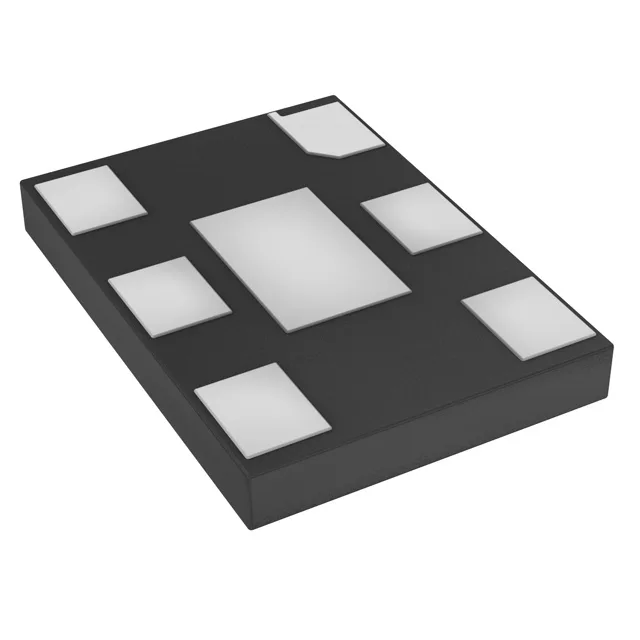
Microchip Technology DSC1103AI2-025.0000 — Crystals & Oscillators

DSC1103AI2-025.0000 MEMS XO, 25 MHz, LVDS, ±25 ppm, Active

MPNDSC1103AI2-025.0000
Active

Microchip DSC1103AI2-025.0000, XO (Standard), 25 MHz, LVDS output, ±25 ppm frequency stability, 2.25V–3.63V supply, -40°C to 85°C, 6-SMD package, standby (power down) function.

Sourced new & surplus through independent channelsAuthenticity-screened · ESD-safe packingListing updated Aug 2026

Specifications

DSC1103AI2-025.0000 specifications
ParameterValue
TypeXO (Standard)
SeriesDSC1103
MountingSurface Mount
Voltage2.25V ~ 3.63V
Current - supply32mA
Current - supply (Disable)95µA
Frequency25 MHz
Frequency stability±25ppm
Operating temperature-40°C~85°C
Size (Dimension)0.276\" L x 0.197\" W (7.00mm x 5.00mm)
Height - seated0.035\" (0.90mm)
OutputLVDS
PackageTube
FunctionStandby (Power Down)
Base resonatorMEMS
Case6-SMD, No Lead Exposed Pad

Product details

MEMS oscillator with LVDS output for industrial timing

Supply voltage spans 2.25V to 3.63V, covering both 2.5V and 3.3V logic rails directly — no extra LDO needed between the rail and the Vdd pin.

Standby function saves power in intermittent-duty designs

That is a 300× reduction, which matters for a battery-powered sensor node that sleeps 99 % of the time and wakes to take a reading. A standard quartz crystal oscillator does not have a standby pin — you would have to gate the output with a separate logic buffer or cut power with a MOSFET, adding two extra components. The DSC1103 integrates that function into the package.

The 6-SMD, No Lead Exposed Pad package (7.00 mm × 5.00 mm, 0.90 mm seated height) is a standard footprint shared across the DSC1103 family, so a layout designed for this part can also accept other frequencies in the same series without a board spin.

Frequently asked questions

Can the DSC1103AI2-025.0000 replace a standard crystal oscillator?

No — a standard crystal oscillator outputs a single-ended CMOS or sine wave, while this part outputs LVDS (differential). The LVDS output requires a 100 Ω termination resistor at the receiver and a differential input buffer on the load. If your design expects a single-ended clock, you would need a level translator or a different oscillator from the DSC1103 family with CMOS output.

Is the DSC1103AI2-025.0000 compatible with a 2.5V or 3.3V supply?

Yes — the supply voltage range is 2.25V to 3.63V, so it runs directly on either a 2.5V rail (with margin down to 2.25V) or a 3.3V rail (with margin up to 3.63V). No external regulator is needed between the rail and the Vdd pin.