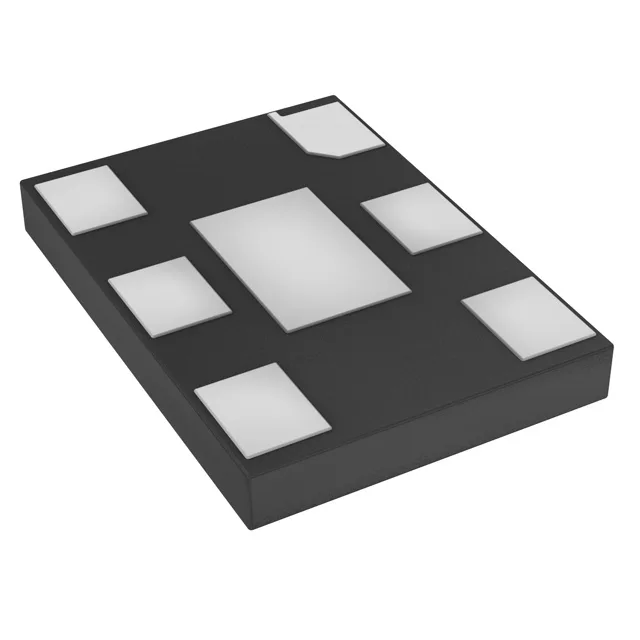
Microchip Technology DSC1103AE1-200.0000 — Crystals & Oscillators

DSC1103AE1-200.0000 200 MHz LVDS MEMS XO

MPNDSC1103AE1-200.0000
Active

Microchip DSC1103AE1-200.0000, XO (Standard) series, 200 MHz LVDS output, MEMS resonator, 6-SMD no-lead exposed-pad package, 2.25V–3.63V supply, -20°C to 70°C.

Sourced new & surplus through independent channelsAuthenticity-screened · ESD-safe packingListing updated Aug 2026

Specifications

DSC1103AE1-200.0000 specifications
ParameterValue
TypeXO (Standard)
SeriesDSC1103
MountingSurface Mount
Voltage2.25V ~ 3.63V
Current - supply32mA
Current - supply (Disable)95µA
Frequency200 MHz
Frequency stability±50ppm
Operating temperature-20°C~70°C
Size (Dimension)0.276\" L x 0.197\" W (7.00mm x 5.00mm)
Height - seated0.035\" (0.90mm)
OutputLVDS
PackageTube
FunctionStandby (Power Down)
Base resonatorMEMS
Case6-SMD, No Lead Exposed Pad

Product details

200 MHz LVDS clock source with MEMS reliability

The DSC1103AE1-200.0000 is a 200 MHz LVDS oscillator built on a MEMS resonator rather than a quartz crystal — the MEMS base eliminates the frequency drift and shock sensitivity that quartz exhibits over time and temperature, so the ±50 ppm stability holds across the -20°C to 70°C range without the aging curve of a crystal. LVDS output at 200 MHz suits high-speed serial links (Gigabit Ethernet, PCIe reference clocks, FPGA transceiver banks) where the differential swing keeps noise coupling low and the 32 mA max supply current is modest for the frequency.

Supply voltage tolerance and standby control

The 2.25V to 3.63V supply range means the oscillator runs directly from a 2.5V or 3.3V rail — no extra LDO needed.

Frequently asked questions

Can DSC1103AE1-200.0000 be used with a 3.3V supply?

Yes — the supply voltage range is 2.25V to 3.63V, so a 3.3V rail is within tolerance. The same part also runs on 2.5V without adjustment.

Does DSC1103AE1-200.0000 have a standby mode?

Yes — the Standby (Power Down) function disables the output and drops supply current to 95 µA max, useful for power-gating the clock on unused interfaces.