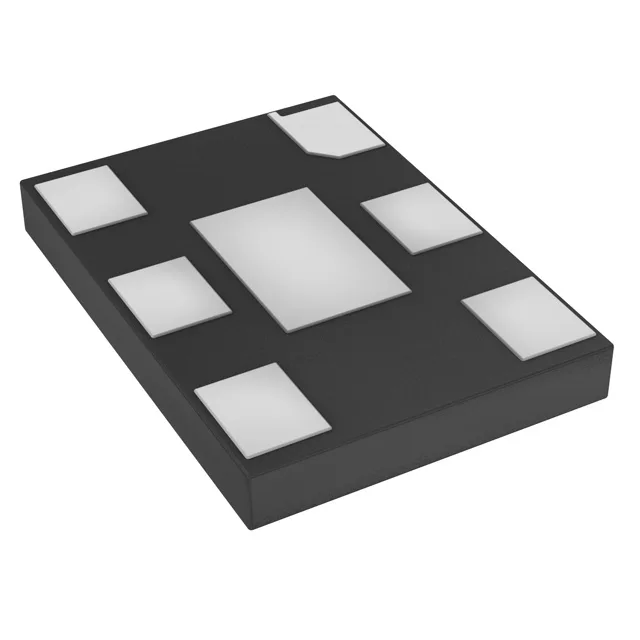
Microchip Technology DSC1103AE1-125.0000 — Crystals & Oscillators

DSC1103AE1-125.0000 Microchip MEMS XO, 125 MHz LVDS, Active

MPNDSC1103AE1-125.0000
Active

Microchip Technology DSC1103AE1-125.0000, XO (Standard) MEMS oscillator, 125 MHz LVDS output, ±50 ppm stability, 2.25V–3.63V supply, standby (power-down) function, 6-SMD package.

Sourced new & surplus through independent channelsAuthenticity-screened · ESD-safe packingListing updated Aug 2026

Specifications

DSC1103AE1-125.0000 specifications
ParameterValue
TypeXO (Standard)
SeriesDSC1103
MountingSurface Mount
Voltage2.25V ~ 3.63V
Current - supply32mA
Current - supply (Disable)95µA
Frequency125 MHz
Frequency stability±50ppm
Operating temperature-20°C~70°C
Size (Dimension)0.276\" L x 0.197\" W (7.00mm x 5.00mm)
Height - seated0.035\" (0.90mm)
OutputLVDS
PackageTube
FunctionStandby (Power Down)
Base resonatorMEMS
Case6-SMD, No Lead Exposed Pad

Product details

125 MHz LVDS MEMS oscillator with standby

The DSC1103AE1-125.0000 is a MEMS-based XO (Standard) oscillator delivering a 125 MHz LVDS output with ±50 ppm frequency stability across -20°C to +70°C. It operates from a 2.25V to 3.63V supply, drawing 32 mA max from the rail while active, and drops to 95 µA max in standby (power-down) mode. The standby function disables the output and places the oscillator in a low-power state, making it suitable for intermittent-duty or battery-powered systems where the clock tree can be gated.

Housed in a 6-SMD, No Lead Exposed Pad package measuring 7.00mm x 5.00mm with a seated height of 0.90mm — a standard 7x5 mm oscillator footprint that matches many quartz XO land patterns.

Frequently asked questions

What is the difference between MEMS and quartz oscillators?

A MEMS oscillator uses a silicon micro-electromechanical resonator instead of a quartz crystal. It is factory-trimmed to frequency, requires no external load capacitors, and offers better resistance to vibration and shock. The trade-off is typically a slightly wider frequency stability specification compared to a high-end quartz TCXO, though the ±50 ppm stability here is adequate for most Ethernet, PCIe, and general-purpose clock applications.