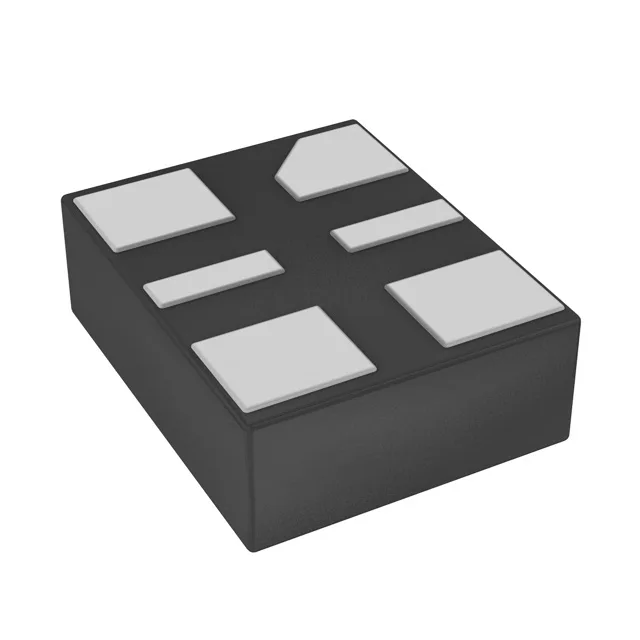
Microchip Technology DSC1102DI2-125.0000 — Crystals & Oscillators

DSC1102DI2-125.0000 Microchip 125 MHz MEMS XO LVPECL Active

MPNDSC1102DI2-125.0000
Active

Microchip Technology DSC1102DI2-125.0000, XO (Standard) with LVPECL output, 125 MHz frequency, MEMS resonator, 2.25V–3.6V supply, -40°C to 85°C, 6-SMD no-lead package.

Independent supplier — new & surplus stockAuthenticity-screened · ESD-safe packingListing updated Aug 2026

Specifications

DSC1102DI2-125.0000 specifications
ParameterValue
TypeXO (Standard)
SeriesDSC1102
MountingSurface Mount
Supply voltage2.25V ~ 3.6V
Current - supply58mA
Current - supply (Disable)95µA
Frequency125 MHz
Frequency stability±25ppm
Operating temperature-40°C~85°C
Size (Dimension)0.098\" L x 0.079\" W (2.50mm x 2.00mm)
Height - seated0.035\" (0.90mm)
OutputLVPECL
PackageTube
FunctionStandby (Power Down)
Base resonatorMEMS
Case6-SMD, No Lead

Product details

125 MHz LVPECL MEMS oscillator for high-speed clock trees

The DSC1102DI2-125.0000 is a Microchip DSC1102-series MEMS-based XO delivering a 125 MHz LVPECL output — the differential signal keeps jitter low over the 2.25V to 3.6V supply range, which matters when clocking a SerDes or FPGA transceiver that needs a clean reference.

Active lifecycle and sourcing through independent distribution

Frequently asked questions

Can the DSC1102DI2-125.0000 replace the DSC1102DI2-100.0000 on the same board?

The two share the same DSC1102 series, package (6-SMD no-lead), supply range, and pinout — the only difference is frequency (125 MHz vs 100 MHz). If the downstream logic can accept 125 MHz, the replacement is pin-compatible; otherwise a clock divider or PLL reconfiguration may be needed.

What is the output type and waveform of the DSC1102DI2-125.0000?

LVPECL — a differential positive-referenced emitter-coupled logic output. It provides a clean, low-jitter square wave suitable for driving 50-ohm terminated transmission lines at 125 MHz.

What supply voltage does the DSC1102DI2-125.0000 require?

2.25V to 3.6V — the wide range allows it to run from a 2.5V or 3.3V rail without an extra regulator. The LVPECL output swing scales with the supply, so check the receiver's input threshold at the chosen Vdd.