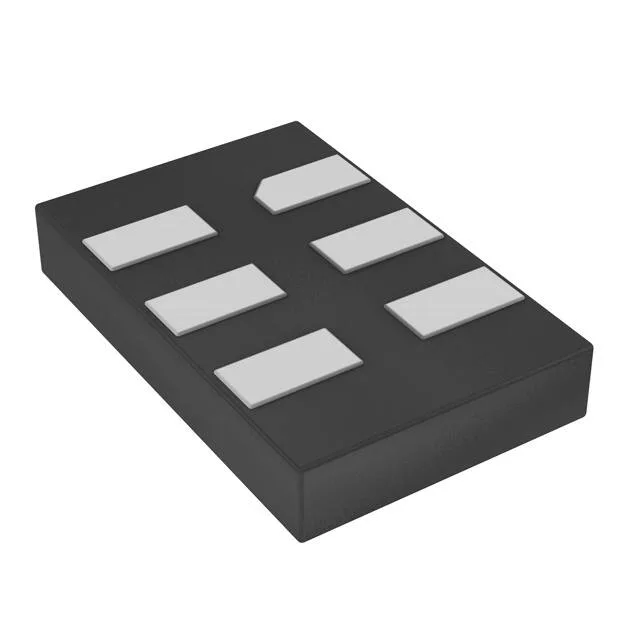
Microchip Technology DSC1102BE1-156.2500 — Crystals & Oscillators

DSC1102BE1-156.2500 XO 156.25 MHz LVPECL MEMS Oscillator –

MPNDSC1102BE1-156.2500
Active

Microchip DSC1102BE1-156.2500, DSC1102 series, XO (Standard) oscillator, 156.25 MHz LVPECL output, MEMS resonator, ±50 ppm stability, 2.25 V to 3.6 V supply, -20°C to 70°C, 6-SMD no-lead package.

Sourced new & surplus through independent channelsAuthenticity-screened · ESD-safe packingListing updated Aug 2026

Specifications

DSC1102BE1-156.2500 specifications
ParameterValue
TypeXO (Standard)
SeriesDSC1102
MountingSurface Mount
Voltage2.25V ~ 3.6V
Current - supply58mA
Current - supply (Disable)95µA
Frequency156.25 MHz
Frequency stability±50ppm
Operating temperature-20°C~70°C
Size (Dimension)0.197\" L x 0.126\" W (5.00mm x 3.20mm)
Height - seated0.035\" (0.90mm)
OutputLVPECL
PackageTube
FunctionStandby (Power Down)
Base resonatorMEMS
Case6-SMD, No Lead

Product details

156.25 MHz LVPECL clock source — MEMS vs quartz trade-off

The DSC1102BE1-156.2500: This is a 156.25 MHz XO (Standard) oscillator with LVPECL output — the frequency and logic family target high-speed serial links (10GbE, Fibre Channel, PCIe Gen 1/2) and FPGA reference clocks that need a differential signal with tight edge symmetry.

Package footprint and layout constraints

Housed in a 6-SMD, no-lead package measuring 5.00 mm x 3.20 mm with a seated height of 0.90 mm — the 0.197" x 0.126" footprint is common to many MEMS and quartz oscillators, so a single PCB land pattern can serve multiple BOM options.

No last-time-buy notice or end-of-life schedule is recorded. Branded Microchip Technology; the DSC1102 series includes multiple frequency-stability and temperature-grade variants. The base product number DSC1102 covers the family.

Frequently asked questions

Can DSC1102BE1-156.2500 be used with a 2.5 V supply?

Yes. The supply voltage range is 2.25 V to 3.6 V, so a 2.5 V rail is within spec. The LVPECL output swing scales with VDD — at 2.5 V the differential swing is reduced but still meets the LVPECL input threshold of most receivers. Confirm the AC-coupled termination network for the lower rail voltage.

What is the difference between DSC1102BE1-156.2500 and DSC1102AE1-156.2500?

The difference is the operating temperature range. The BE1 variant (this part) is rated -20°C to 70°C. The AE1 variant is typically rated 0°C to 70°C. Both share the same 156.25 MHz frequency, LVPECL output, ±50 ppm stability, and 2.25-3.6 V supply. The BE1 extends the cold-end for outdoor or unconditioned indoor environments.

What is the closest pin-compatible alternative to DSC1102BE1-156.2500 in this oscillator family?

Within the DSC1102 series, the DSC1102CE1-156.2500 is the same frequency, output, and package — the difference is the stability grade. The CE1 variant typically offers ±25 ppm stability versus the BE1's ±50 ppm. Pinout and footprint are identical, so a BOM swap requires no layout change.