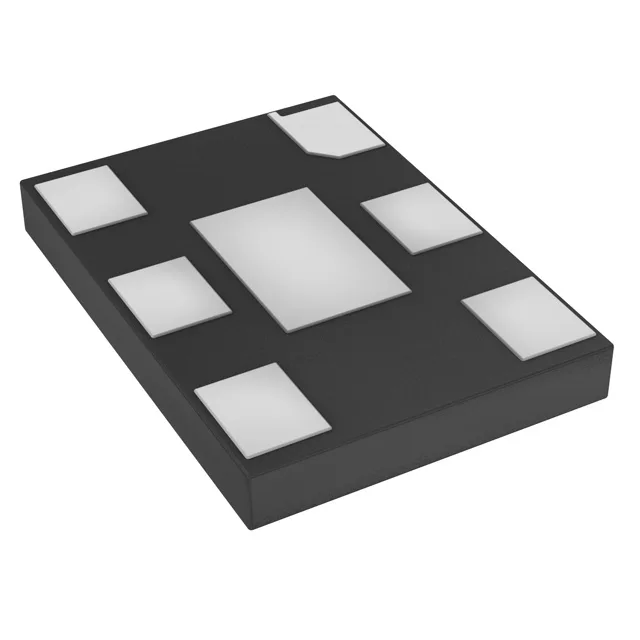
Microchip Technology DSC1102AI2-200.0000T — Crystals & Oscillators

DSC1102AI2-200.0000T – Microchip 200 MHz LVPECL MEMS

MPNDSC1102AI2-200.0000T
Active

Microchip Technology DSC1102 series XO (Standard), 200 MHz LVPECL output, MEMS base resonator, 2.25V–3.6V supply, ±25 ppm stability, -40°C to 85°C, 6-SMD no-lead.

Sourced new & surplus through independent channelsAuthenticity-screened · ESD-safe packingListing updated Aug 2026

Specifications

DSC1102AI2-200.0000T specifications
ParameterValue
TypeXO (Standard)
SeriesDSC1102
MountingSurface Mount
Voltage2.25V ~ 3.6V
Current - supply58mA
Current - supply (Disable)95µA
Frequency200 MHz
Frequency stability±25ppm
Operating temperature-40°C~85°C
Size (Dimension)0.276\" L x 0.197\" W (7.00mm x 5.00mm)
Height - seated0.035\" (0.90mm)
OutputLVPECL
PackageTape & Reel (TR)
FunctionStandby (Power Down)
Base resonatorMEMS
Case6-SMD, No Lead

Product details

200 MHz LVPECL MEMS oscillator — signal-integrity fit

The DSC1102AI2-200.0000T delivers a 200 MHz LVPECL output from a MEMS resonator, eliminating the quartz-crystal startup and aging concerns of a traditional XO. The LVPECL differential pair drives long PCB traces or backplane cables with controlled edge rates — the 58 mA max supply current reflects the output swing and termination current, not the core oscillator draw.

The 2.25V to 3.6V supply range covers 2.5V and 3.3V rails without an external LDO, simplifying the power tree in mixed-voltage designs.

The 6-SMD no-lead package (7.00 mm x 5.00 mm, 0.90 mm seated height) reflows with standard lead-free profiles and shares a footprint common to many 7x5 mm oscillators — a straightforward drop-in for existing layouts.

The laser etch on the package should trace to a valid Microchip date-code plant; if the font or marking pattern looks off, a decap check is warranted before the reel hits the pick-and-place.

Frequently asked questions

What output type does DSC1102AI2-200.0000T have?

LVPECL differential output. The LVPECL pair requires proper termination (typically 50 Ω to Vcc-2V) and AC-coupling if driving a CML or HCSL input. The 200 MHz edge rate makes PCB trace impedance control important.