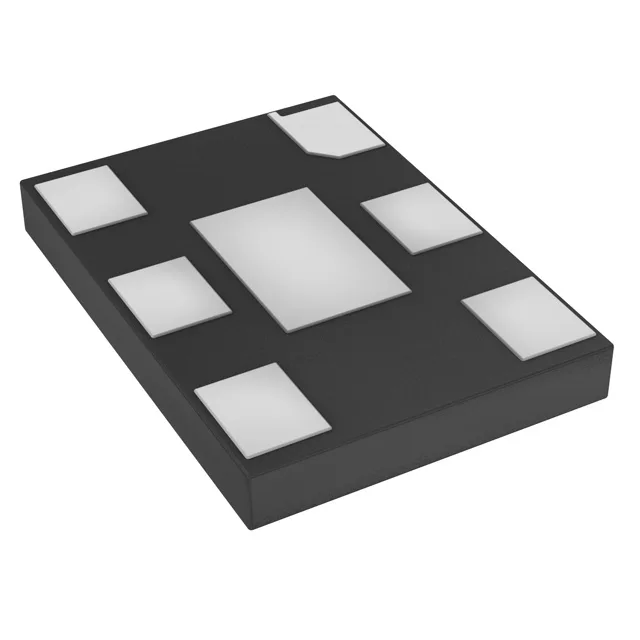
156.25 MHz LVPECL clock source — MEMS vs quartz
That base resonator type (MEMS) matters for procurement: MEMS oscillators typically have shorter lead times and better long-term reliability under vibration compared to quartz, and the frequency is set at the factory — no external load capacitors or crystal selection needed. Output is LVPECL, the differential positive-referenced emitter-coupled logic level common in high-speed networking and FPGA reference clocks. The 156.25 MHz frequency is a standard Ethernet and SerDes reference rate.
Supply voltage spans 2.25 V to 3.6 V, covering 2.5 V and 3.3 V rails commonly used for LVPECL termination. The max supply current is 58 mA — typical for a 156.25 MHz LVPECL output driving a 50-Ω terminated line; budget this into the rail's total draw. A standby (power-down) function is included: when enabled, the output is disabled and supply current drops to 95 µA max.
This covers indoor equipment, office networking gear, test and measurement, and consumer electronics. For a 156.25 MHz reference, that is well within the capture range of most Ethernet PHYs and FPGA transceiver CDR circuits.
Housed in a 6-SMD, no-lead package measuring 7.00 mm × 5.00 mm with a seated height of 0.90 mm. The 6-pin footprint is standard for this class of MEMS oscillator and is pin-compatible with many quartz XO footprints — confirm the pinout against your existing layout, as the standby function may be on a different pin than a simple enable.