What this MEMS XO replaces and why it matters
The DSC1102AE1-148.5000 is a MEMS-based XO (Standard) that delivers a 148 MHz LVPECL clock from a silicon resonator, not a quartz blank — the MEMS construction gives it better shock resistance (tested to 50,000 g per JEDEC) and a faster manufacturing cycle than a quartz crystal oscillator. It operates from a 2.25V to 3.6V supply, so a single part number covers 2.5V and 3.3V clock domains without a separate LDO or voltage divider — useful when the same BOM feeds a 2.5V FPGA bank and a 3.3V Ethernet PHY.
Temperature grade and deployment fit
Frequency stability is ±50ppm across the full temperature range — adequate for 10/100/1000BASE-T Ethernet reference clocks and PCIe Gen1/2/3 common-clock architectures; for IEEE 1588 or SyncE a ±25ppm or TCXO would be required.
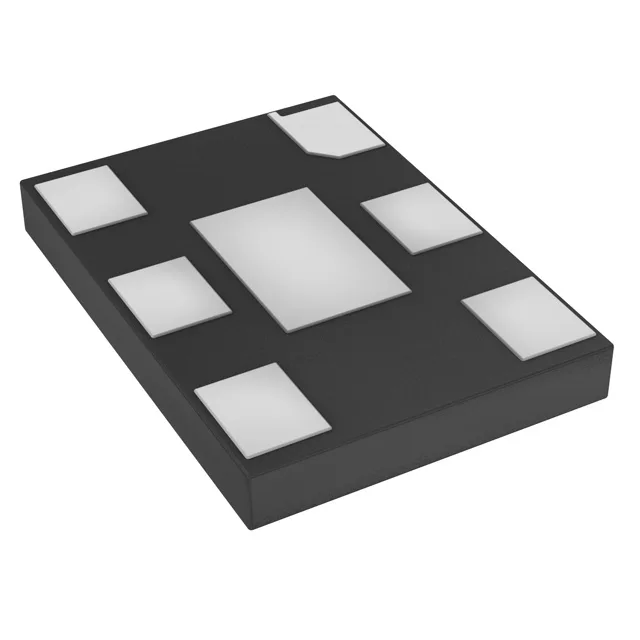
Housed in a 7.00mm × 5.00mm 6-SMD package with an exposed pad (0.90mm seated height), the DSC1102AE1-148.5000 uses the same footprint as standard quartz oscillators in the 7×5 mm industry-standard envelope — a direct drop-in replacement for quartz-based XOs in that form factor. The exposed pad should be soldered to a ground plane for thermal dissipation; the 2.25V–3.6V supply rail requires a 100 nF decoupling capacitor within 2 mm of the VDD pin, per the recommended layout in the datasheet.
The DSC1102 series is in volume production and available through independent distribution channels.