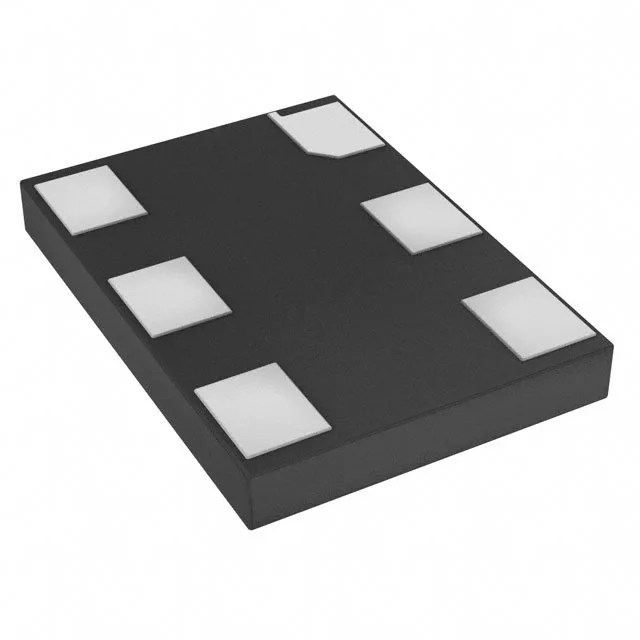
Microchip Technology DSC1101NI1-050.0000T — Crystals & Oscillators

DSC1101NI1-050.0000T Microchip 50 MHz MEMS XO, CMOS, Active

MPNDSC1101NI1-050.0000T
Active

Microchip Technology DSC1101NI1-050.0000T, XO (Standard) 50 MHz, CMOS output, MEMS resonator, 2.25V–3.6V supply, ±50 ppm stability, -40°C to 85°C, 6-SMD No Lead package.

Independent supplier — new & surplus stockAuthenticity-screened · ESD-safe packingListing updated Aug 2026

Specifications

DSC1101NI1-050.0000T specifications
ParameterValue
TypeXO (Standard)
SeriesDSC1101
MountingSurface Mount
Supply voltage2.25V ~ 3.6V
Current - supply95µA
Frequency50 MHz
Frequency stability±50ppm
Operating temperature-40°C~85°C
Size (Dimension)0.276\" L x 0.197\" W (7.00mm x 5.00mm)
Height - seated0.035\" (0.90mm)
OutputCMOS
PackageTape & Reel (TR)
FunctionStandby (Power Down)
Base resonatorMEMS
Case6-SMD, No Lead

Product details

The DSC1101NI1-050.0000T is a standard XO (Standard) from Microchip's DSC1101 series, built on a MEMS resonator rather than a quartz crystal.

Supply flexibility and low-power standby

The supply voltage range spans 2.25V to 3.6V, covering 2.5V and 3.3V rails without a separate regulator.

Housed in a 6-SMD, No Lead package measuring 7.00 mm x 5.00 mm with a seated height of 0.90 mm. The surface-mount footprint is standard for 7x5 mm oscillators; the 6-pad layout matches industry-common pin assignments for MEMS XOs, so a layout designed for a quartz 7x5 oscillator typically accepts this part without a board spin.

Frequently asked questions

What is the output type and voltage supply range for the DSC1101NI1-050.0000T?

Output is CMOS, compatible with standard digital logic inputs. The supply voltage range is 2.25V to 3.6V, so it operates on 2.5V or 3.3V rails without an external LDO.

Is the DSC1101NI1-050.0000T a direct replacement for a quartz 50 MHz oscillator?

The DSC1101NI1-050.0000T is a MEMS-based XO, not a quartz crystal oscillator. It is pin-compatible with many 7x5 mm 6-pad oscillators, but the MEMS resonator has different jitter and phase-noise characteristics than a quartz design. For a like-for-like swap, confirm that the downstream PLL or clock tree accepts a MEMS source — most do, but some legacy timing circuits are tuned for quartz.