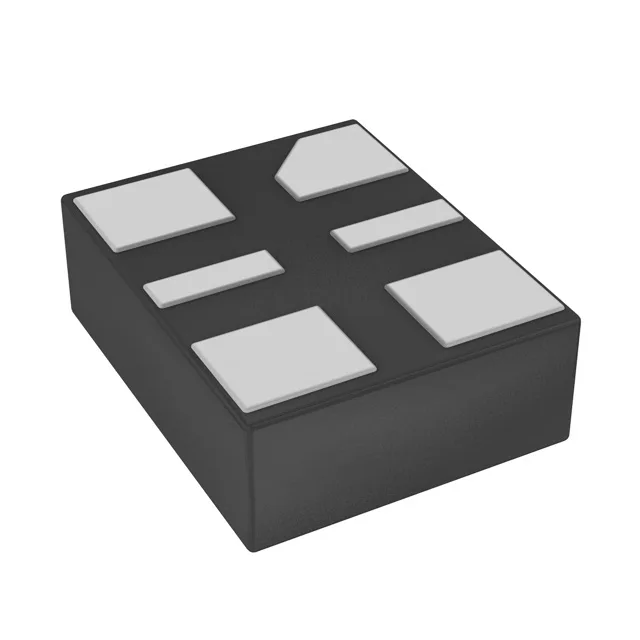
Microchip Technology DSC1101DM1-050.0000T — Crystals & Oscillators

DSC1101DM1-050.0000T MEMS XO 50 MHz CMOS -55°C to 125°C

MPNDSC1101DM1-050.0000T
Active

Microchip DSC1101DM1-050.0000T, XO (Standard) MEMS oscillator, 50 MHz CMOS output, 2.25V~3.6V supply, ±50ppm stability, -55°C~125°C, 6-VDFN package.

Independent supplier — new & surplus stockAuthenticity-screened · ESD-safe packingListing updated Aug 2026

Specifications

DSC1101DM1-050.0000T specifications
ParameterValue
TypeXO (Standard)
SeriesDSC1101
MountingSurface Mount
Supply voltage2.25V ~ 3.6V
Current - supply35mA
Current - supply (Disable)95µA
Frequency50 MHz
Frequency stability±50ppm
Operating temperature-55°C~125°C
Size (Dimension)0.098\" L x 0.079\" W (2.50mm x 2.00mm)
Height - seated0.035\" (0.90mm)
OutputCMOS
PackageTape & Reel (TR)
FunctionStandby (Power Down)
Base resonatorMEMS
Case6-VDFN

Product details

Supply voltage spans 2.25V to 3.6V, so it runs from a 2.5V or 3.3V rail without an extra regulator.

When the standby pin is asserted, the oscillator stops and draws 95µA max from the supply — not a full shutdown, but low enough to extend battery life in intermittently powered designs. Active current is 35mA max at 50 MHz, typical for a high-speed CMOS output driving a moderate load.

Frequently asked questions

Can DSC1101DM1-050.0000T replace a quartz oscillator?

Yes, it is a direct functional replacement for a 50 MHz quartz oscillator in the same footprint — the 6-VDFN package is standard. The MEMS resonator offers better shock and vibration tolerance, so it may be a drop-in upgrade in rugged environments, but confirm the pinout and supply voltage (2.25V to 3.6V) against your existing quartz part.

What is the standby function on DSC1101DM1-050.0000T?

The standby (power down) function disables the output and reduces supply current to 95µA max. It is controlled by a dedicated pin — when asserted, the oscillator stops; when released, it starts up again. This is designed for systems that need to conserve power between active periods.