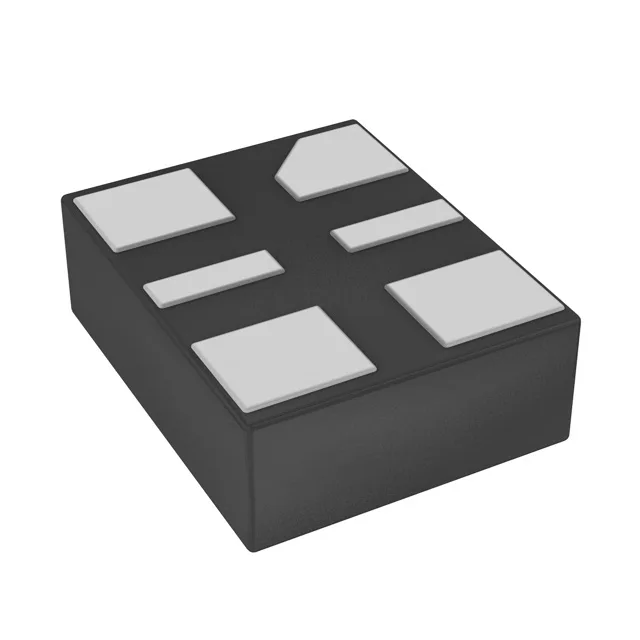
Microchip Technology DSC1101DL5-020.0000T — Crystals & Oscillators

DSC1101DL5-020.0000T – Microchip MEMS XO, 20 MHz, CMOS

MPNDSC1101DL5-020.0000T
Active

Microchip Technology DSC1101 series, XO (Standard) MEMS oscillator, 20 MHz CMOS output, ±10 ppm frequency stability, 2.25 V to 3.6 V supply, -40°C to 105°C operating range, 6-VDFN package, Tape & Reel.

$2.0250Ref. price · indicative, final on quote
Sourced new & surplus through independent channelsAuthenticity-screened · ESD-safe packingListing updated Aug 2026

Specifications

DSC1101DL5-020.0000T specifications
ParameterValue
TypeXO (Standard)
SeriesDSC1101
MountingSurface Mount
Voltage2.25V ~ 3.6V
Current - supply35mA
Current - supply (Disable)95µA
Frequency20 MHz
Frequency stability±10ppm
Operating temperature-40°C~105°C
Size (Dimension)0.098\" L x 0.079\" W (2.50mm x 2.00mm)
Height - seated0.035\" (0.90mm)
OutputCMOS
PackageTape & Reel (TR)
FunctionStandby (Power Down)
Base resonatorMEMS
Case6-VDFN

Product details

MEMS oscillator for industrial timing

The DSC1101DL5-020.0000T: The MEMS resonator replaces a quartz crystal, offering improved shock and vibration tolerance — relevant for motor drives, outdoor telecom, and engine-bay electronics where crystal aging or mechanical resonance can shift frequency.

Supply voltage and power-down function

The Standby (Power Down) function drops supply current to 95 µA max when disabled, allowing the oscillator to be gated by a GPIO for system-level power management without a separate load switch.

Housed in a 6-VDFN package measuring 2.50 mm x 2.00 mm with a seated height of 0.90 mm — the compact footprint suits space-constrained PCBs in portable or densely populated industrial modules.

Listed as Active by Microchip — the part is in production and available for new designs. Sourced through independent distribution; quoted to order against the BOM quantity.

Frequently asked questions

What is the frequency stability of the DSC1101DL5-020.0000T?

This includes initial tolerance, temperature drift, and supply-voltage variation.