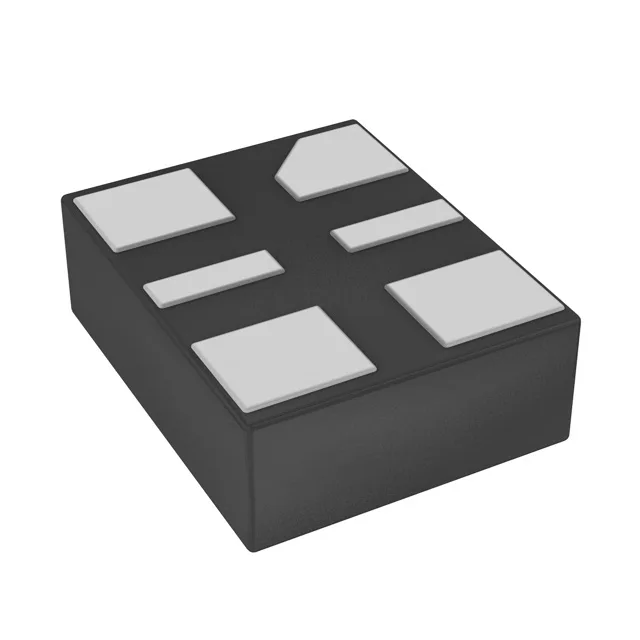
Microchip Technology DSC1101DL1-150.0000T — Crystals & Oscillators

DSC1101DL1-150.0000T Microchip MEMS XO, 150 MHz, CMOS

MPNDSC1101DL1-150.0000T
Active

Microchip Technology DSC1101DL1-150.0000T, XO (Standard) MEMS oscillator, 150 MHz CMOS output, Standby (Power Down) function, 6-VDFN package, -40°C to 105°C operation.

$1.4900Ref. price · indicative, final on quote
Sourced new & surplus through independent channelsAuthenticity-screened · ESD-safe packingListing updated Aug 2026

Specifications

DSC1101DL1-150.0000T specifications
ParameterValue
TypeXO (Standard)
SeriesDSC1101
MountingSurface Mount
Voltage2.25V ~ 3.6V
Current - supply95µA
Frequency150 MHz
Frequency stability±50ppm
Operating temperature-40°C~105°C
Size (Dimension)0.098\" L x 0.079\" W (2.50mm x 2.00mm)
Height - seated0.035\" (0.90mm)
OutputCMOS
PackageTape & Reel (TR)
FunctionStandby (Power Down)
Base resonatorMEMS
Case6-VDFN

Product details

150 MHz MEMS oscillator with standby for industrial clocking

The DSC1101DL1-150.0000T is a MEMS-based XO (Standard) oscillator from Microchip's DSC1101 series, delivering a 150 MHz CMOS output from a 2.25V to 3.6V supply rail. Its Standby (Power Down) function drops the supply current to near zero when the enable pin is de-asserted, making it a fit for power-cycled or battery-backed systems where the clock tree must idle between active periods.

Active lifecycle — design-in ready

Listed as Active by Microchip, the DSC1101DL1-150.0000T is in production and available for new designs. The MEMS resonator construction provides better shock and vibration immunity than a quartz crystal, and the ±50 ppm frequency stability holds over the full temperature and voltage range — no trimming needed.

Frequently asked questions

What does the Standby (Power Down) function do on this oscillator?

When the standby pin is pulled low, the internal MEMS resonator and output driver are disabled, reducing supply current to the microamp range. The output enters a high-impedance state. Pulling the pin high restarts the oscillator within the specified startup time — useful for power-gated clock domains in wireless or IoT designs.