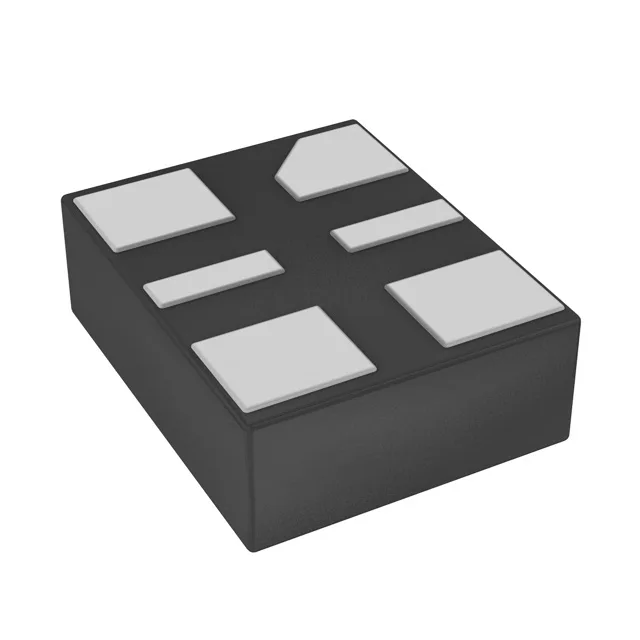
Unlike quartz-based oscillators, the MEMS resonator provides higher shock and vibration tolerance and a faster startup time — relevant for outdoor telecom, factory-floor controllers, and portable instrumentation where the board sees mechanical stress.
Active current consumption is 35 mA max — a typical figure for a 50 MHz CMOS output at 3.3 V; the MEMS core itself draws less, with the bulk going to the output buffer driving the load capacitance.