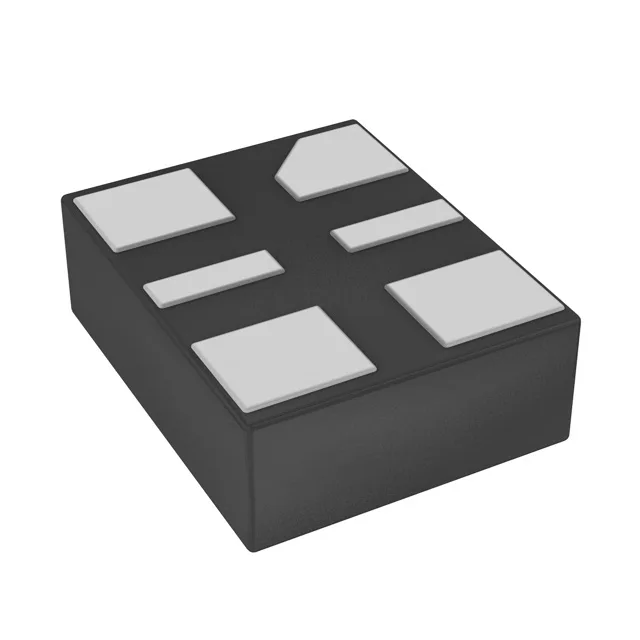
Microchip Technology DSC1101DE2-008.0000T — Crystals & Oscillators

DSC1101DE2-008.0000T MEMS XO 8 MHz CMOS ±25 ppm Active

MPNDSC1101DE2-008.0000T
Active

Microchip Technology DSC1101DE2-008.0000T, XO (Standard) MEMS oscillator, 8 MHz CMOS output, ±25 ppm frequency stability, Standby (Power Down) function, -20°C to 70°C, 6-VDFN package, Tape & Reel.

Independent supplier — new & surplus stockAuthenticity-screened · ESD-safe packingListing updated Aug 2026

Specifications

DSC1101DE2-008.0000T specifications
ParameterValue
TypeXO (Standard)
SeriesDSC1101
MountingSurface Mount
Supply voltage2.25V ~ 3.6V
Current - supply35mA
Current - supply (Disable)95µA
Frequency8 MHz
Frequency stability±25ppm
Operating temperature-20°C ~ 70°C
Size (Dimension)0.098\" L x 0.079\" W (2.50mm x 2.00mm)
Height - seated0.035\" (0.90mm)
OutputCMOS
PackageTape & Reel (TR)
FunctionStandby (Power Down)
Base resonatorMEMS
Case6-VDFN

Product details

MEMS oscillator at 8 MHz with CMOS output

Standby function and supply range

This makes the part suitable for battery-powered or duty-cycled systems where the oscillator must be gated off between active periods. The supply voltage spans 2.25 V to 3.6 V, covering common 2.5 V and 3.3 V logic rails without an external regulator.

Housed in a 6-VDFN package measuring 2.50 mm x 2.00 mm with a seated height of 0.90 mm — a low-profile, surface-mount footprint that fits tight PCB layouts typical of portable or space-constrained designs.

Frequently asked questions

Can the DSC1101DE2-008.0000T replace a standard 8 MHz quartz crystal oscillator?

Yes, it is a drop-in replacement for an 8 MHz crystal oscillator module with CMOS output, provided the board accepts a 6-VDFN package and the supply voltage is within the 2.25 V to 3.6 V range. The MEMS resonator eliminates the need for external load capacitors and startup matching — a direct swap on the clock input of an MCU or SoC.

What is the difference between the DSC1101DE2 and a quartz oscillator?

The DSC1101DE2 uses a MEMS resonator instead of a quartz crystal. This means no load-capacitance matching, no startup margin calculation, and better resistance to vibration and shock. Frequency stability (±25 ppm) and temperature range (-20°C to 70°C) are comparable to a commercial-grade quartz XO, but the MEMS part is generally more robust in harsh environments.