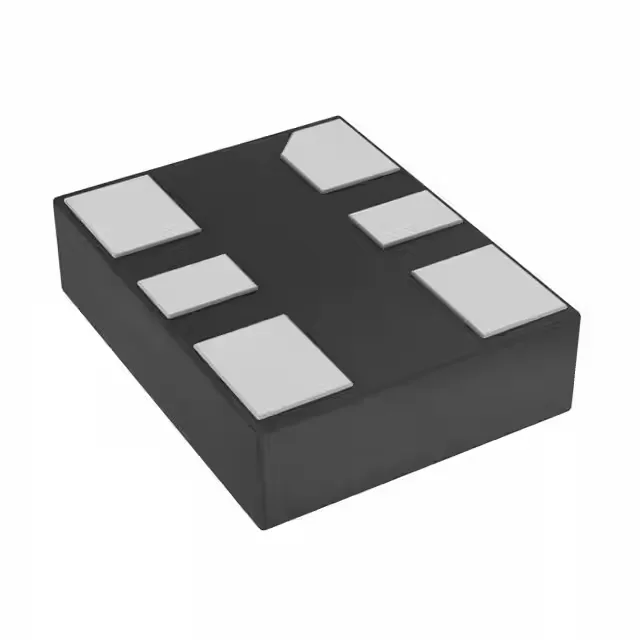
Microchip Technology DSC1101CM1-100.0000 — Crystals & Oscillators

DSC1101CM1-100.0000 100 MHz MEMS XO, CMOS, Standby, Active

MPNDSC1101CM1-100.0000
Active

Microchip Technology DSC1101CM1-100.0000, XO (Standard) MEMS oscillator, 100 MHz, CMOS output, ±50 ppm stability, -55°C to 125°C, 6-SMD no-lead package.

Sourced new & surplus through independent channelsAuthenticity-screened · ESD-safe packingListing updated Aug 2026

Specifications

DSC1101CM1-100.0000 specifications
ParameterValue
TypeXO (Standard)
SeriesDSC1101
MountingSurface Mount
Voltage2.25V ~ 3.6V
Current - supply35mA
Current - supply (Disable)95µA
Frequency100 MHz
Frequency stability±50ppm
Operating temperature-55°C~125°C
Size (Dimension)0.126\" L x 0.098\" W (3.20mm x 2.50mm)
Height - seated0.035\" (0.90mm)
OutputCMOS
PackageTube
FunctionStandby (Power Down)
Base resonatorMEMS
Case6-SMD, No Lead

Product details

100 MHz MEMS oscillator with standby — the fit decision

The DSC1101CM1-100.0000 is a 100 MHz MEMS-based XO (Standard) oscillator from Microchip's DSC1101 series, delivering a CMOS output in a compact 3.20 mm x 2.50 mm 6-SMD no-lead package. The standby (power-down) function drops supply current to 95 µA max when disabled, making this part suitable for battery-operated systems that need to gate the clock during idle periods. With a ±50 ppm frequency stability and a wide supply range of 2.25 V to 3.6 V, this oscillator covers 2.5 V and 3.3 V logic rails without a separate regulator, simplifying the power tree.

Military temperature grade and deployment context

The MEMS base resonator inherently withstands higher shock and vibration than a quartz crystal — a practical advantage in engine-bay or gun-hardened environments where quartz spurs can shift frequency.

Sourced through independent distribution; quoted to order against the BOM quantity.

Frequently asked questions

Is the DSC1101CM1-100.0000 obsolete or active?

Active — Microchip lists the product status as Active with no planned discontinuation. Suitable for both new designs and production replenishment.

What does the standby (power down) function do on this oscillator?

When the standby pin is asserted, the oscillator stops its internal MEMS drive and CMOS output, drawing only 95 µA max from the supply. The output enters a high-impedance state, allowing the downstream clock tree to be gated without a separate clock buffer.

What is the frequency stability of the DSC1101CM1-100.0000?

±50 ppm over the full -55°C to 125°C range and including aging. This stability is adequate for most Ethernet, PCIe, and serial-link reference clocks that require tighter than ±100 ppm but do not need the ±25 ppm of a TCXO.