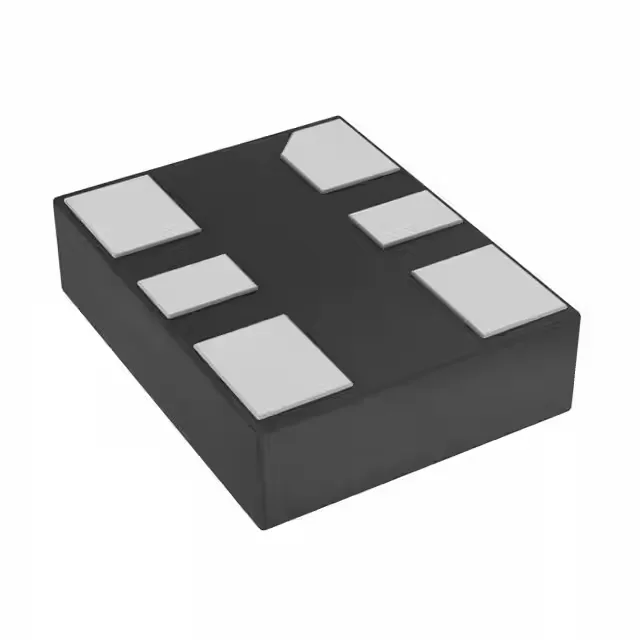
Microchip Technology DSC1101CM1-033.3333T — Crystals & Oscillators

DSC1101CM1-033.3333T MEMS XO – 33.3333 MHz, CMOS

MPNDSC1101CM1-033.3333T
Active

Microchip DSC1101CM1-033.3333T, XO (Standard), 33.3333 MHz, CMOS output, ±50 ppm stability, 2.25V–3.6V supply, Standby (Power Down) function, -55°C to 125°C, 6-SMD no-lead package.

$1.7550Ref. price · indicative, final on quote
Independent supplier — new & surplus stockAuthenticity-screened · ESD-safe packingListing updated Aug 2026

Specifications

DSC1101CM1-033.3333T specifications
ParameterValue
TypeXO (Standard)
SeriesDSC1101
MountingSurface Mount
Supply voltage2.25V ~ 3.6V
Current - supply35mA
Current - supply (Disable)95µA
Frequency33.3333 MHz
Frequency stability±50ppm
Operating temperature-55°C~125°C
Size (Dimension)0.126\" L x 0.098\" W (3.20mm x 2.50mm)
Height - seated0.035\" (0.90mm)
OutputCMOS
PackageTape & Reel (TR)
FunctionStandby (Power Down)
Base resonatorMEMS
Case6-SMD, No Lead

Product details

MEMS oscillator with full military temperature range

The DSC1101CM1-033.3333T is a MEMS-based XO from Microchip's DSC1101 series, delivering a 33.3333 MHz CMOS output with ±50 ppm frequency stability across the full -55°C to 125°C military temperature range. The 2.25V to 3.6V supply range covers both 2.5V and 3.3V logic rails with margin, so a single BOM line can serve multiple voltage domains without separate order codes.

Standby power-down saves 35 mA when idle

This makes the part suitable for battery-powered or intermittently-operated systems where the clock must be gated off to conserve energy.

Active production – sourced to order

Frequently asked questions

Does DSC1101CM1-033.3333T have a standby or power-down feature?

Yes, it has a Standby (Power Down) function that reduces supply current from 35 mA maximum to 95 µA maximum when the output is disabled.

Is DSC1101CM1-033.3333T a direct replacement for older quartz oscillators?

It can replace a quartz-based XO in the same 6-SMD no-lead footprint, but the MEMS resonator eliminates load-capacitance matching and offers better shock/vibration tolerance. The output is CMOS, so the load interface must be compatible.