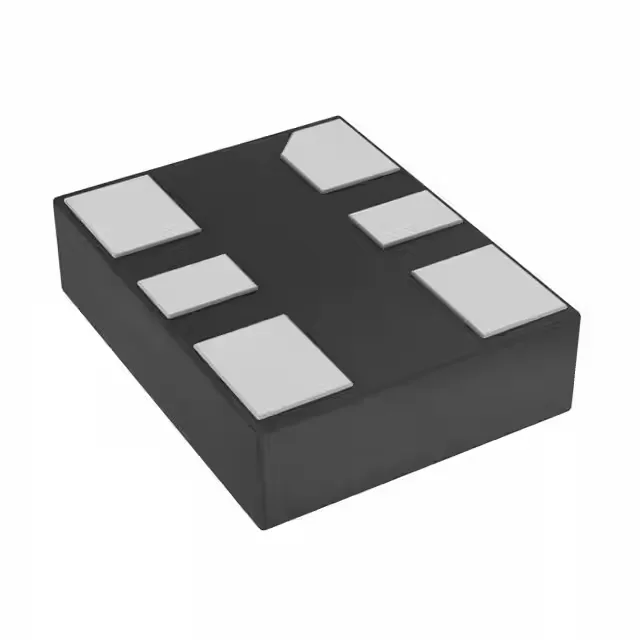
Microchip Technology DSC1101CL5-052.5000 — Crystals & Oscillators

DSC1101CL5-052.5000 MEMS Oscillator 52.5 MHz CMOS Active

MPNDSC1101CL5-052.5000
Active

Microchip Technology DSC1101CL5-052.5000, XO (Standard) MEMS oscillator, 52.5 MHz CMOS output, ±10 ppm absolute pull range, 2.25V–3.6V supply, -40°C to 105°C, 6-VDFN surface-mount package.

Sourced new & surplus through independent channelsAuthenticity-screened · ESD-safe packingListing updated Aug 2026

Specifications

DSC1101CL5-052.5000 specifications
ParameterValue
TypeXO (Standard)
SeriesDSC1101
MountingSurface Mount
Voltage2.25V ~ 3.6V
Current - supply35mA
Current - supply (Disable)95µA
Frequency52.5 MHz
Operating temperature-40°C~105°C
Size (Dimension)0.126\" L x 0.098\" W (3.20mm x 2.50mm)
Height - seated0.035\" (0.90mm)
OutputCMOS
PackageTube
FunctionStandby (Power Down)
Base resonatorMEMS
Case6-VDFN
Absolute pull range±10ppm

Product details

MEMS resonator vs quartz — the drop-in reality

The MEMS construction delivers better shock and vibration tolerance — relevant for industrial and automotive environments where quartz can exhibit microphonic frequency shifts. Pin-compatible with standard 6-VDFN quartz oscillators; the same PCB footprint works without layout changes. The ±10 ppm absolute pull range matches the stability of many quartz-based XOs, so timing margin in a comms or data-acquisition chain is comparable.

Supply voltage and standby — one rail fits all

Operates across a 2.25V to 3.6V supply — a single oscillator covers 2.5V and 3.3V logic rails, reducing BOM line count. Active current draw is 35 mA max at 52.5 MHz.

Industrial temperature grade — outdoor and engine-bay ready

Suitable for outdoor telecom enclosures, factory-floor PLCs, and under-hood electronics without derating. The 6-VDFN package measures 3.20mm x 2.50mm with a seated height of 0.90mm, fitting tight-profile designs.

Frequently asked questions

What is the frequency stability of DSC1101CL5-052.5000?

The absolute pull range (APR) is ±10 ppm. This is the total frequency deviation over the full operating temperature and supply voltage range — it defines the timing margin for the downstream PLL or data clock recovery.