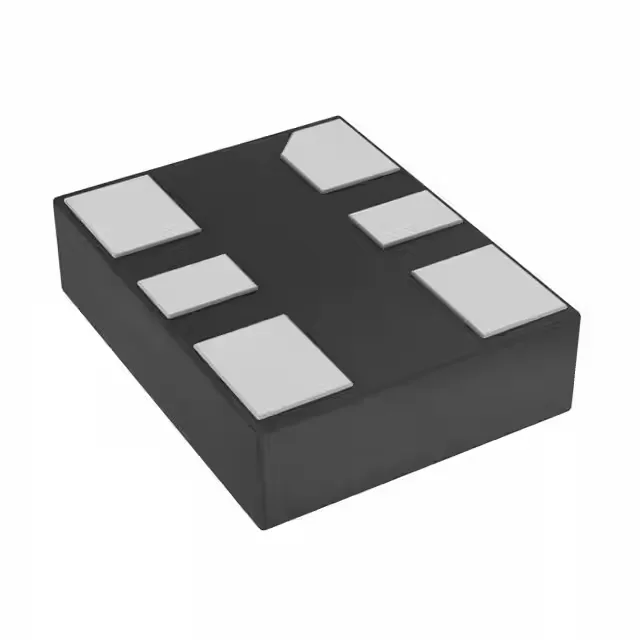
Microchip Technology DSC1101CE5-010.0000T — Crystals & Oscillators

DSC1101CE5-010.0000T – 10 MHz MEMS XO, CMOS, ±10 ppm, Active

MPNDSC1101CE5-010.0000T
Active

Microchip DSC1101CE5-010.0000T, 10 MHz XO (Standard), CMOS output, ±10 ppm frequency stability, 2.25V–3.6V supply, 95 µA max supply current, standby (power-down) function, -20°C to 70°C, 6-SMD no-lead package, tape & reel.

Independent supplier — new & surplus stockAuthenticity-screened · ESD-safe packingListing updated Aug 2026

Specifications

DSC1101CE5-010.0000T specifications
ParameterValue
TypeXO (Standard)
SeriesDSC1101
MountingSurface Mount
Supply voltage2.25V ~ 3.6V
Current - supply95µA
Frequency10 MHz
Frequency stability±10ppm
Operating temperature-20°C~70°C
Size (Dimension)0.126\" L x 0.098\" W (3.20mm x 2.50mm)
Height - seated0.035\" (0.90mm)
OutputCMOS
PackageTape & Reel (TR)
FunctionStandby (Power Down)
Base resonatorMEMS
Case6-SMD, No Lead

Product details

It outputs a CMOS-level clock and draws a maximum of 95 µA from a 2.25V to 3.6V supply rail. That makes it a solid drop-in for a quartz oscillator in a board that sees mechanical stress, as long as the temperature stays within -20°C to 70°C.

Package, mounting, and handling on the board

Housed in a 6-SMD no-lead package measuring 3.20 mm x 2.50 mm with a seated height of 0.90 mm. The no-lead footprint means the terminations are flush with the package bottom — reflow soldering is the intended attach method; hand-soldering on site is possible with a fine tip and steady hands, but the small pads make alignment critical.

You can design it into new products without worrying about an imminent EOL.

Frequently asked questions

Can this MEMS oscillator replace a quartz crystal oscillator in my design?

Functionally yes — it outputs a CMOS clock at 10 MHz with ±10 ppm stability, which matches many quartz XO applications. The MEMS construction is more rugged under shock and vibration.

What is the closest pin-compatible alternative in the DSC1101 family?

The DSC1101 series shares the same 6-SMD no-lead footprint and pinout across frequencies. A different frequency variant (e.g., 25 MHz or 50 MHz) in the same package and supply range would be a direct mechanical swap — just confirm the output type (CMOS) and stability grade match your timing budget.