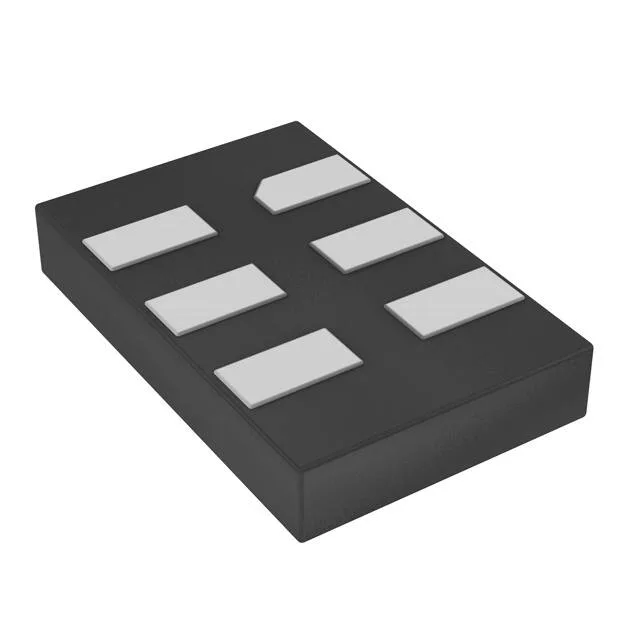
Microchip Technology DSC1101BI1-125.0037 — Crystals & Oscillators

DSC1101BI1-125.0037 MEMS XO 125.0037 MHz CMOS - Microchip

MPNDSC1101BI1-125.0037
Active

Microchip Technology DSC1101 series, XO (Standard) MEMS oscillator, 125.0037 MHz, CMOS output, ±50 ppm stability, 6-SMD no-lead package, -40°C to 85°C

Independent supplier — new & surplus stockAuthenticity-screened · ESD-safe packingListing updated Aug 2026

Specifications

DSC1101BI1-125.0037 specifications
ParameterValue
TypeXO (Standard)
SeriesDSC1101
MountingSurface Mount
Supply voltage2.25V ~ 3.6V
Current - supply35mA
Current - supply (Disable)95µA
Frequency125.0037 MHz
Frequency stability±50ppm
Operating temperature-40°C~85°C
Size (Dimension)0.197\" L x 0.126\" W (5.00mm x 3.20mm)
Height - seated0.035\" (0.90mm)
OutputCMOS
PackageTube
FunctionStandby (Power Down)
Base resonatorMEMS
Case6-SMD, No Lead

Product details

125.0037 MHz MEMS clock with standby power-down

The DSC1101BI1-125.0037: This is a Microchip DSC1101 series MEMS-based XO delivering a 125.0037 MHz CMOS clock from a 6-SMD no-lead package. That matters for battery-operated gear where every milliamp-hour counts.

The 2.25V to 3.6V supply range covers both 2.5V and 3.3V rails without a separate LDO — one less component on the BOM. For a 125 MHz clock, that is ±6.25 kHz — tight enough for most Ethernet PHYs and FPGA reference inputs.

The 6-SMD no-lead footprint (5.00 mm x 3.20 mm) is a standard MEMS oscillator land pattern — no via-in-pad or special stencil required.

Frequently asked questions

Is DSC1101BI1-125.0037 a direct replacement for a standard quartz crystal oscillator?

Yes, in most cases. It is a drop-in MEMS replacement for a 125.0037 MHz crystal oscillator with CMOS output in a 5.0 x 3.2 mm 6-pin SMD package. The MEMS resonator is more rugged than quartz, but the output drive strength and rise/fall times are comparable. Confirm the enable polarity and pin 1 function on your existing footprint — the standby function uses the same pin as some quartz oscillators' output-enable.

What does the standby power-down function do on this oscillator?

When the standby pin is asserted (typically pulled low), the internal MEMS resonator and output driver shut down, dropping supply current from 35 mA max to 95 µA max. The output goes high-impedance. The oscillator restarts within a few hundred microseconds after the pin is de-asserted — fast enough for most sleep/wake cycles.