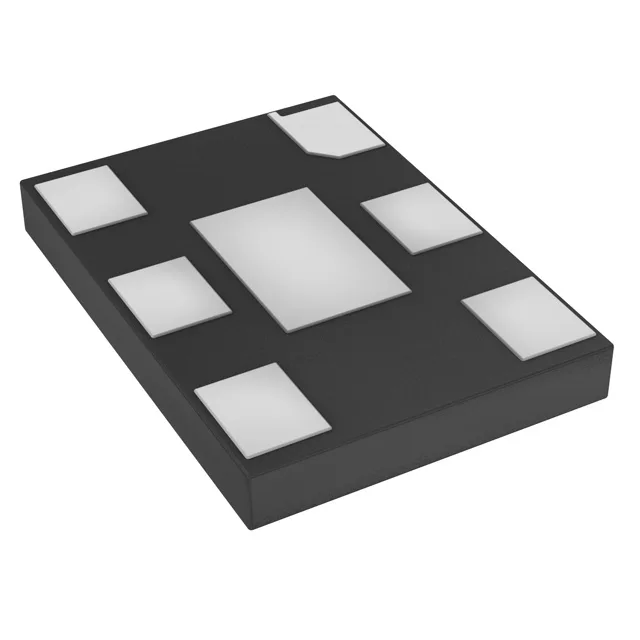
Microchip Technology DSC1101AI5-099.7200 — Crystals & Oscillators

DSC1101AI5-099.7200 MEMS XO – 99.72 MHz CMOS, ±10ppm, Active

MPNDSC1101AI5-099.7200
Active

MEMS-based XO (Standard), 99.72 MHz, CMOS output, 2.25V–3.6V supply, ±10ppm stability, -40°C to 85°C, 6-SMD no-lead exposed pad package.

Sourced new & surplus through independent channelsAuthenticity-screened · ESD-safe packingListing updated Aug 2026

Specifications

DSC1101AI5-099.7200 specifications
ParameterValue
TypeXO (Standard)
SeriesDSC1101
MountingSurface Mount
Voltage2.25V ~ 3.6V
Current - supply95µA
Frequency99.72 MHz
Frequency stability±10ppm
Operating temperature-40°C~85°C
Size (Dimension)0.276\" L x 0.197\" W (7.00mm x 5.00mm)
Height - seated0.035\" (0.90mm)
OutputCMOS
PackageTube
FunctionStandby (Power Down)
Base resonatorMEMS
Case6-SMD, No Lead Exposed Pad

Product details

99.72 MHz MEMS XO – CMOS output, ±10ppm stability

The DSC1101AI5-099.7200: It operates from a single 2.25V to 3.6V supply, covering 2.5V, 3.0V, and 3.3V logic rails without an extra regulator.

Housed in a 6-SMD, No Lead Exposed Pad package measuring 7.00mm x 5.00mm with a seated height of 0.90mm, it fits standard 7x5 oscillator footprints and the exposed pad aids thermal conduction to the PCB ground plane.

No pin-compatible second source is documented in the Microchip DSC1101 series — the base product number DSC1101 covers multiple frequency and stability variants, but the 99.72 MHz ±10ppm trim is specific to this order code.

Frequently asked questions

Does the DSC1101AI5-099.7200 have a standby or power-down mode?

Yes, the function is Standby (Power Down). When asserted, the output goes high-impedance and the supply current drops to near zero, preserving battery charge in intermittently active systems.

Is the DSC1101AI5-099.7200 a direct replacement for a quartz oscillator at the same frequency?

It is a MEMS-based XO (Standard) with CMOS output. Electrically it replaces a quartz oscillator at 99.72 MHz with the same supply voltage and output type, but the MEMS die has different shock and vibration characteristics — verify the application's phase-noise and jitter requirements against the datasheet before swapping.