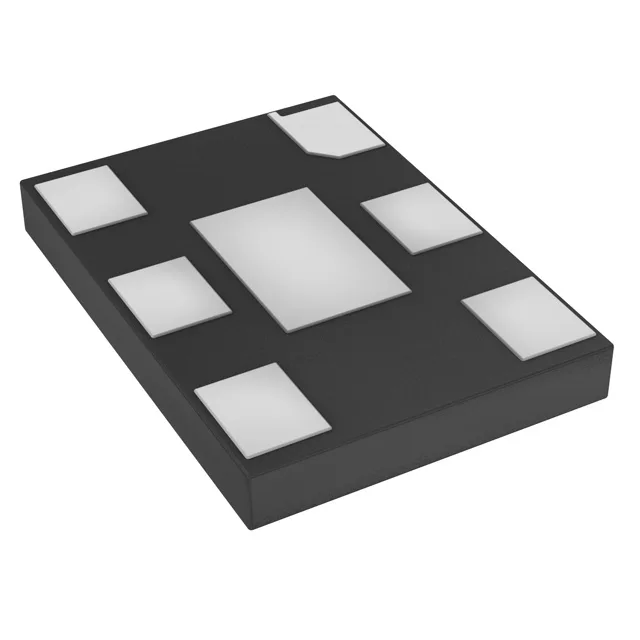
Microchip Technology DSC1101AI2-156.2500T — Crystals & Oscillators

DSC1101AI2-156.2500T MEMS XO – 156.25 MHz, CMOS

MPNDSC1101AI2-156.2500T
Active

Microchip DSC1101 series MEMS XO, 156.2500 MHz, CMOS output, ±25 ppm stability, 2.25V–3.6V supply, -40°C to 85°C, 6-SMD package, standby power-down function.

Sourced new & surplus through independent channelsAuthenticity-screened · ESD-safe packingListing updated Aug 2026

Specifications

DSC1101AI2-156.2500T specifications
ParameterValue
TypeXO (Standard)
SeriesDSC1101
MountingSurface Mount
Voltage2.25V ~ 3.6V
Current - supply95µA
Frequency156.25 MHz
Frequency stability±25ppm
Operating temperature-40°C~85°C
Size (Dimension)0.276\" L x 0.197\" W (7.00mm x 5.00mm)
Height - seated0.035\" (0.90mm)
OutputCMOS
PackageTape & Reel (TR)
FunctionStandby (Power Down)
Base resonatorMEMS
Case6-SMD, No Lead Exposed Pad

Product details

156.25 MHz MEMS oscillator for high-speed serial links

The DSC1101AI2-156.2500T is a MEMS-based XO (standard oscillator) delivering a 156.25 MHz CMOS output — the reference frequency for 10G Ethernet, Fibre Channel, and many FPGA transceiver banks.

6-SMD package — board layout notes

Seated height is 0.90 mm max.

Frequently asked questions

What is the standby current of the DSC1101AI2?

95 µA max supply current in standby (power-down) mode. This is the current drawn when the output is disabled — the oscillator core is off, but the bias and control logic remain powered.

Are MEMS oscillators more reliable than quartz crystal oscillators?

MEMS oscillators (like the DSC1101) have no moving quartz blank — they are inherently more shock- and vibration-tolerant than quartz-based XOs. The trade-off is typically slightly higher phase noise at close-in offsets. For 156.25 MHz CMOS clocking of an Ethernet PHY or FPGA, the MEMS reliability advantage usually outweighs the noise difference.