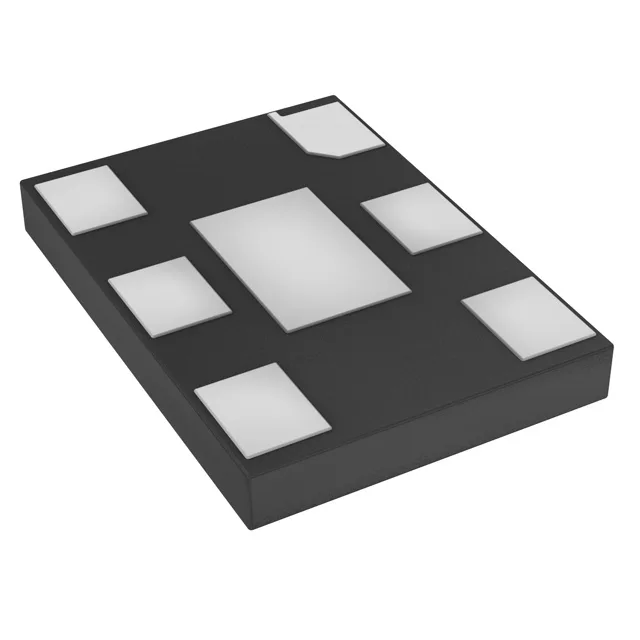
Microchip Technology DSC1101AE3-084.6720 — Crystals & Oscillators

DSC1101AE3-084.6720 MEMS Oscillator – 84.672 MHz, CMOS

MPNDSC1101AE3-084.6720
Active

Microchip Technology DSC1101AE3-084.6720, XO (Standard) MEMS oscillator, 84.672 MHz CMOS output, ±20 ppm stability, 2.25 V to 3.6 V supply, -20°C to 70°C, 6-VDFN exposed pad package.

Sourced new & surplus through independent channelsAuthenticity-screened · ESD-safe packingListing updated Aug 2026

Specifications

DSC1101AE3-084.6720 specifications
ParameterValue
TypeXO (Standard)
SeriesDSC1101
MountingSurface Mount
Voltage2.25V ~ 3.6V
Current - supply35mA
Current - supply (Disable)95µA
Frequency84.672 MHz
Operating temperature-20°C~70°C
Size (Dimension)0.276\" L x 0.197\" W (7.00mm x 5.00mm)
Height - seated0.035\" (0.90mm)
OutputCMOS
PackageTube
FunctionStandby (Power Down)
Base resonatorMEMS
Case6-VDFN Exposed Pad
Absolute pull range±20ppm

Product details

84.672 MHz MEMS oscillator – what it buys the clock tree

That frequency sits in the sweet spot for 100BASE-T Ethernet MAC/PHY reference clocks and USB 2.0 high-speed crystal-less controllers – the ±20 ppm absolute pull range (APR) keeps the link timing within the ±100 ppm window those interfaces require. The CMOS output swings rail-to-rail, which mates directly with the clock input of most MCUs, FPGAs, and PHYs.

Package and reflow – 6-VDFN exposed pad

Housed in a 6-VDFN exposed pad package measuring 7.00 mm x 5.00 mm with a seated height of 0.90 mm. Standard FR-4 with a 4-layer stack handles the footprint cleanly. The output goes high-impedance in standby, so the downstream clock input should have a pull-down or be tri-stated to avoid floating gates.

Frequently asked questions

What is the closest pin-compatible alternative in the DSC1101 family?

Within the DSC1101 series, the base product number DSC1101 covers the same package and pinout. The suffix (AE3-084.6720) encodes the frequency and stability grade. A different frequency variant (e.g., DSC1101AE2 with a different APR) shares the same footprint but outputs a different clock – confirm the target frequency before substituting.