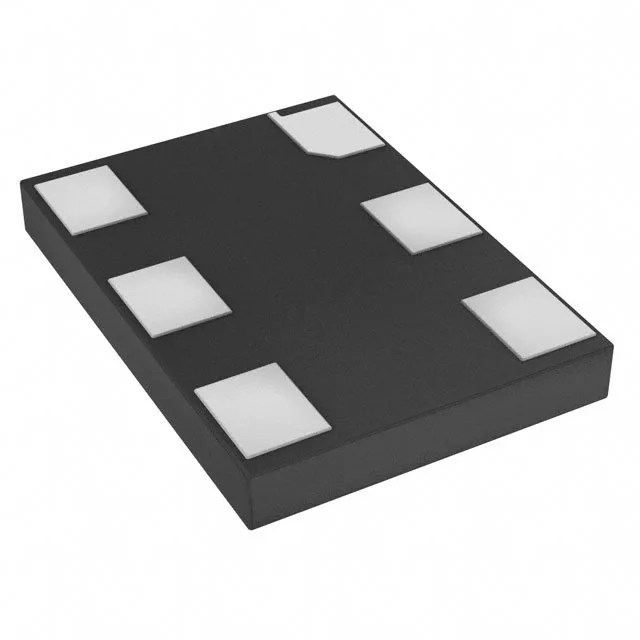
Microchip Technology DSC1101AE2-027.1200 — Crystals & Oscillators

DSC1101AE2-027.1200 MEMS Oscillator – 27.12 MHz, CMOS

MPNDSC1101AE2-027.1200
Active

Microchip Technology DSC1101AE2-027.1200, XO (Standard) MEMS oscillator, 27.12 MHz CMOS output, ±25 ppm stability, 95 µA supply, 2.25V–3.6V range, 6-SMD no-lead package.

Sourced new & surplus through independent channelsAuthenticity-screened · ESD-safe packingListing updated Aug 2026

Specifications

DSC1101AE2-027.1200 specifications
ParameterValue
TypeXO (Standard)
SeriesDSC1101
MountingSurface Mount
Voltage2.25V ~ 3.6V
Current - supply95µA
Frequency27.12 MHz
Frequency stability±25ppm
Operating temperature-20°C~70°C
Size (Dimension)0.276\" L x 0.197\" W (7.00mm x 5.00mm)
Height - seated0.035\" (0.90mm)
OutputCMOS
PackageTube
FunctionStandby (Power Down)
Base resonatorMEMS
Case6-SMD, No Lead

Product details

27.12 MHz MEMS oscillator for low-power timing

Supply current is 95 µA maximum, drawing from a 2.25V to 3.6V rail.

That means the oscillator starts up faster (sub-millisecond typical) and survives higher shock and vibration levels than a crystal can. The 6-SMD no-lead package measures 7.00 mm x 5.00 mm with a seated height of 0.90 mm — a standard footprint that drops onto the same pads as many quartz oscillators, so a board designed for a 7x5 mm crystal oscillator can often take this MEMS part without a layout change.

Frequently asked questions

Can DSC1101AE2-027.1200 replace a standard 27.12 MHz crystal oscillator?

Yes, if the existing board uses a 7.00 mm x 5.00 mm 6-pin SMD footprint with CMOS input. The MEMS oscillator is a drop-in replacement for many quartz XOs of the same size — same supply range, same output type. Confirm the enable/standby pin mapping on your current part; the DSC1101AE2-027.1200 uses a standby (power-down) function on one pin.

What is the function of the standby pin on DSC1101AE2-027.1200?

The standby (power-down) pin disables the output and puts the oscillator into a low-power state. When asserted, the output goes to high-impedance and the supply current drops to near-zero — useful for gating the clock in battery-operated equipment without a separate load switch.