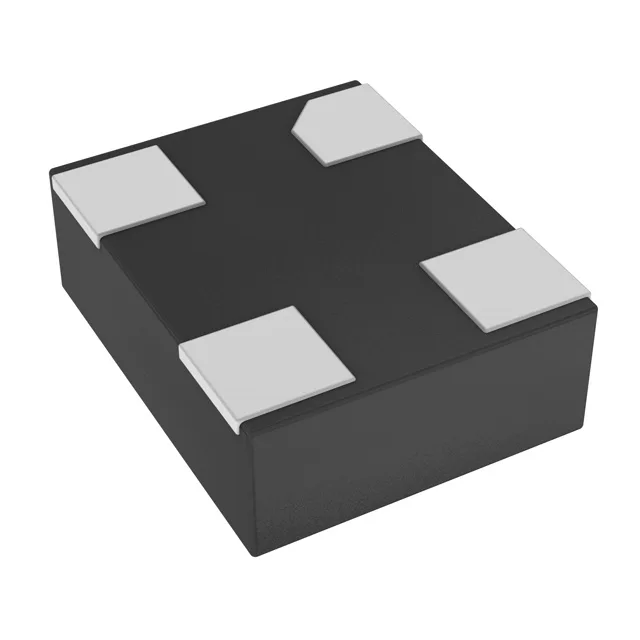
Microchip Technology DSC1033CI2-037.1250 — Crystals & Oscillators

DSC1033CI2-037.1250 MEMS XO – 37.125 MHz, CMOS, Standby

MPNDSC1033CI2-037.1250
Active

Microchip DSC1033CI2-037.1250, PureSilicon™ MEMS XO (Standard), 37.125 MHz CMOS output, 3.3 V supply, ±25 ppm stability, -40 to 85 °C, standby power-down function

Independent supplier — new & surplus stockAuthenticity-screened · ESD-safe packingListing updated Aug 2026

Specifications

DSC1033CI2-037.1250 specifications
ParameterValue
TypeXO (Standard)
SeriesDSC1033, PureSilicon™
MountingSurface Mount
Supply voltage3.3V
Current - supply3mA (Typ)
Current - supply (Disable)1µA
Frequency37.125 MHz
Frequency stability±25ppm
Operating temperature-40°C~85°C
Size (Dimension)0.126\" L x 0.098\" W (3.20mm x 2.50mm)
Height - seated0.035\" (0.90mm)
OutputCMOS
PackageTube
FunctionStandby (Power Down)
Base resonatorMEMS
Case4-SMD, No Lead

Product details

MEMS clock source with standby power-down

Housed in a 4-SMD, No Lead package measuring 3.20 mm x 2.50 mm with a seated height of 0.90 mm, the DSC1033CI2-037.1250 uses a standard surface-mount footprint that matches common quartz XO pads — no layout change needed when swapping from a quartz oscillator of the same frequency and supply voltage.

The DSC1033 base product number covers a family of frequencies and stability grades; the CI2 suffix identifies this specific 37.125 MHz, ±25 ppm, -40 to 85 °C variant.

Frequently asked questions

Can DSC1033CI2-037.1250 replace a quartz oscillator of the same frequency?

Yes, in most cases. The DSC1033CI2-037.1250 is a MEMS-based XO with CMOS output and a standard 4-SMD footprint — it is pin-compatible with many 3.3 V quartz oscillators in the same 3.2 mm x 2.5 mm package. Confirm the enable/disable logic polarity matches your design; the standby function on this part is active-low power-down.

What is the standby power-down function on DSC1033CI2-037.1250?

The standby (power-down) function disables the output and reduces current consumption to 1 µA max. This allows the system to gate the clock off between active periods, saving power in battery-operated or duty-cycled designs.