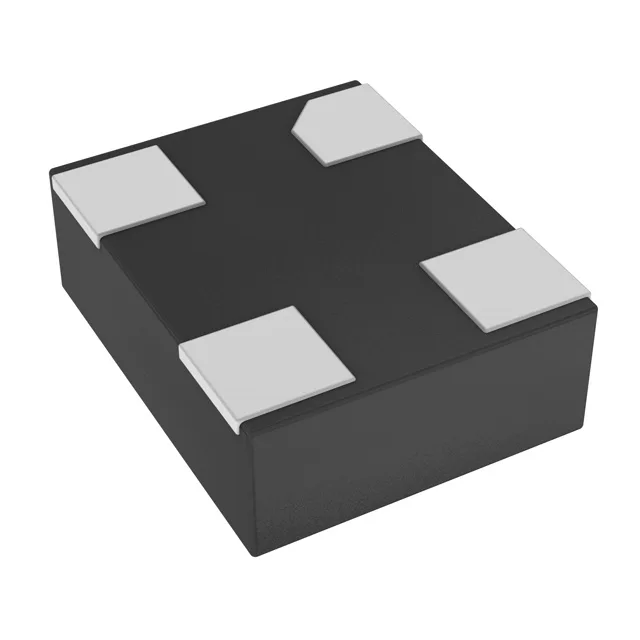
Microchip Technology DSC1033CE1-008.0000T — Crystals & Oscillators

DSC1033CE1-008.0000T MEMS Oscillator 8 MHz 3.3V CMOS XO

MPNDSC1033CE1-008.0000T
Active

Microchip DSC1033CE1-008.0000T, PureSilicon™ MEMS XO, 8 MHz, CMOS output, 3.3V supply, ±50 ppm stability, -20 to 70°C, 4-SMD

Independent supplier — new & surplus stockAuthenticity-screened · ESD-safe packingListing updated Aug 2026

Specifications

DSC1033CE1-008.0000T specifications
ParameterValue
TypeXO (Standard)
SeriesDSC1033, PureSilicon™
MountingSurface Mount
Supply voltage3.3V
Current - supply3mA (Typ)
Current - supply (Disable)1µA
Frequency8 MHz
Frequency stability±50ppm
Operating temperature-20°C~70°C
Size (Dimension)0.126\" L x 0.098\" W (3.20mm x 2.50mm)
Height - seated0.035\" (0.90mm)
OutputCMOS
PackageTape & Reel (TR)
FunctionStandby (Power Down)
Base resonatorMEMS
Case4-SMD, No Lead

Product details

MEMS oscillator for 8 MHz clock generation

The DSC1033CE1-008.0000T is a MEMS-based XO (Standard) from Microchip's PureSilicon™ series, delivering a fixed 8 MHz CMOS output from a 3.3V supply rail. It replaces a quartz crystal + oscillator circuit in a single 4-SMD, No Lead package measuring 3.20mm x 2.50mm.

Power-down standby for battery-conscious designs

This makes the part a strong fit for portable or intermittently-powered equipment where the clock must stop during sleep modes.

Active lifecycle — no design-in risk

Frequently asked questions

Can the DSC1033CE1-008.0000T replace a quartz crystal oscillator in my design?

Yes — the DSC1033CE1-008.0000T is a MEMS-based XO that directly replaces a quartz oscillator module in the same 3.2x2.5mm 4-SMD footprint, with CMOS output and 3.3V supply. It offers lower current draw (3 mA typ vs typical quartz oscillator 5-15 mA) and faster startup, with no external load capacitors needed.

What is the standby power-down function on the DSC1033CE1?

The Standby (Power Down) function disables the output and internal oscillator, reducing supply current to 1 µA max. This is controlled via the enable pin — when pulled low, the oscillator stops; when released or pulled high, it resumes oscillation. Typical startup time after standby is under 1 ms.