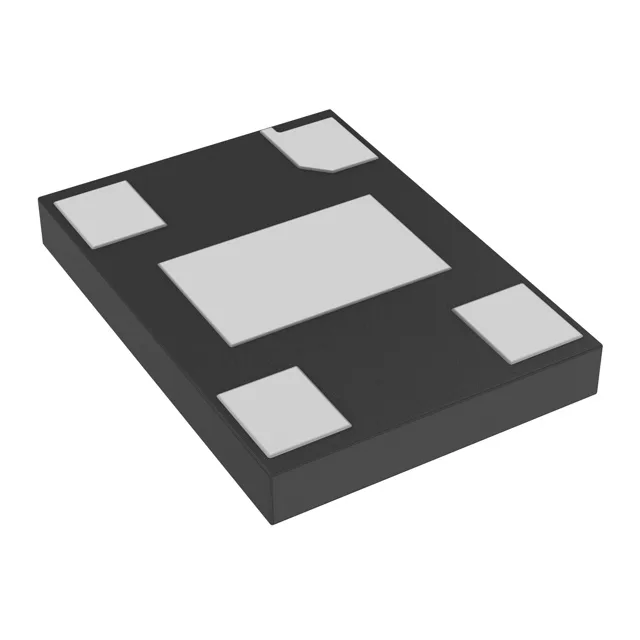
Microchip Technology DSC1033AI1-120.0000T — Crystals & Oscillators

DSC1033AI1-120.0000T MEMS Oscillator 120 MHz CMOS -

MPNDSC1033AI1-120.0000T
Active

Microchip DSC1033, PureSilicon™ series, XO (Standard), MEMS base resonator, 120 MHz CMOS output, 3.3V supply, ±50 ppm stability, -40°C to 85°C, 4-SMD no-lead exposed pad package, Tape & Reel.

Sourced new & surplus through independent channelsAuthenticity-screened · ESD-safe packingListing updated Aug 2026

Specifications

DSC1033AI1-120.0000T specifications
ParameterValue
TypeXO (Standard)
SeriesDSC1033, PureSilicon™
MountingSurface Mount
Voltage3.3V
Current - supply5mA (Typ)
Current - supply (Disable)1µA
Frequency120 MHz
Frequency stability±50ppm
Operating temperature-40°C~85°C
Size (Dimension)0.276\" L x 0.197\" W (7.00mm x 5.00mm)
Height - seated0.035\" (0.90mm)
OutputCMOS
PackageTape & Reel (TR)
FunctionStandby (Power Down)
Base resonatorMEMS
Case4-SMD, No Lead Exposed Pad

Product details

120 MHz MEMS XO with CMOS output

The DSC1033AI1-120.0000T is a MEMS-based XO (Standard) delivering a 120 MHz CMOS clock from a 3.3V supply rail. Output is CMOS, meaning it drives a rail-to-rail square wave into a standard digital input without external termination. The 120 MHz rate suits high-speed logic, Ethernet PHY reference clocks, or FPGA fabric clocks.

Industrial temperature and low-power standby

That sub-microamp sleep current lets a battery-backed design gate the oscillator off between active periods without draining the cell.

Housed in a 4-SMD, No Lead Exposed Pad package measuring 7.00mm x 5.00mm with a seated height of 0.90mm. The exposed pad underneath is the thermal path — ensure the PCB has a matching copper land and at least one via to the ground plane to keep the MEMS die within its operating range. The no-lead package is reworkable with hot air if the pad layout is clean and the board is pre-baked per the MSL rating.

Product status is Active per Microchip.

Frequently asked questions

What is the difference between this MEMS oscillator and a quartz crystal oscillator?

The DSC1033 uses a MEMS resonator instead of a quartz crystal. That means no external load capacitors are needed, start-up is nearly instantaneous, and the part is less sensitive to vibration and shock. The trade-off is that MEMS oscillators typically have slightly wider jitter than a high-end quartz XO, but the ±50 ppm stability here is adequate for most digital interfaces.