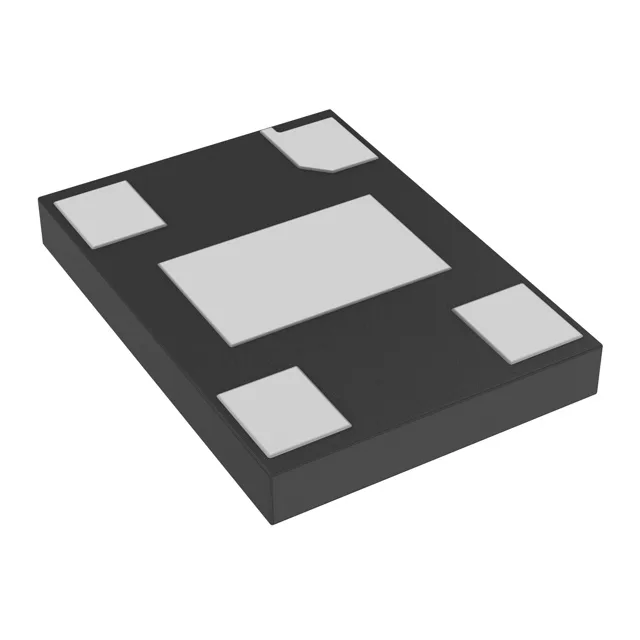
Microchip Technology DSC1033AI1-050.0000 — Crystals & Oscillators

DSC1033AI1-050.0000 – Microchip 50 MHz XO (Standard) CMOS

MPNDSC1033AI1-050.0000
Active

Microchip Technology DSC1033AI1-050.0000, XO (Standard) CMOS oscillator, 50 MHz, ±50 ppm stability, 3.3V supply, -40°C to 85°C, standby function, 4-SMD no lead exposed pad package

Independent supplier — new & surplus stockAuthenticity-screened · ESD-safe packingListing updated Aug 2026

Specifications

DSC1033AI1-050.0000 specifications
ParameterValue
TypeXO (Standard)
SeriesDSC1033, PureSilicon™
MountingSurface Mount
Supply voltage3.3V
Current - supply4mA (Typ)
Current - supply (Disable)1µA
Frequency50 MHz
Frequency stability±50ppm
Operating temperature-40°C~85°C
Size (Dimension)0.276\" L x 0.197\" W (7.00mm x 5.00mm)
Height - seated0.035\" (0.90mm)
OutputCMOS
PackageTube
FunctionStandby (Power Down)
Base resonatorMEMS
Case4-SMD, No Lead Exposed Pad

Product details

MEMS oscillator with standby – 50 MHz, CMOS, 3.3 V

The DSC1033AI1-050.0000 is a 50 MHz XO (Standard) oscillator from Microchip's PureSilicon™ MEMS family, delivering a CMOS output at 3.3 V supply.

Package, footprint, and temperature grade

Housed in a 4-SMD, No Lead Exposed Pad package measuring 7.00 mm x 5.00 mm with a seated height of 0.90 mm – this is the standard 7x5 mm oscillator footprint, so it drops onto existing PCB pads without a layout change.

Frequently asked questions

What is the frequency stability of DSC1033AI1-050.0000?

For a 50 MHz clock, ±50 ppm corresponds to a maximum frequency error of ±2,500 Hz, which is within the capture range of most UARTs and SPI interfaces without additional calibration.

Is DSC1033AI1-050.0000 a direct replacement for existing 50 MHz oscillators?

It is a pin-compatible 7x5 mm 4-pad MEMS oscillator with CMOS output and 3.3 V supply. Provided the existing oscillator also uses the standard 7x5 mm footprint, CMOS output, and 3.3 V rail, the DSC1033AI1-050.0000 can replace it. Confirm the standby function pin mapping – on this part, asserting the standby pin (typically pin 1) disables the output and drops supply current to 1 µA.