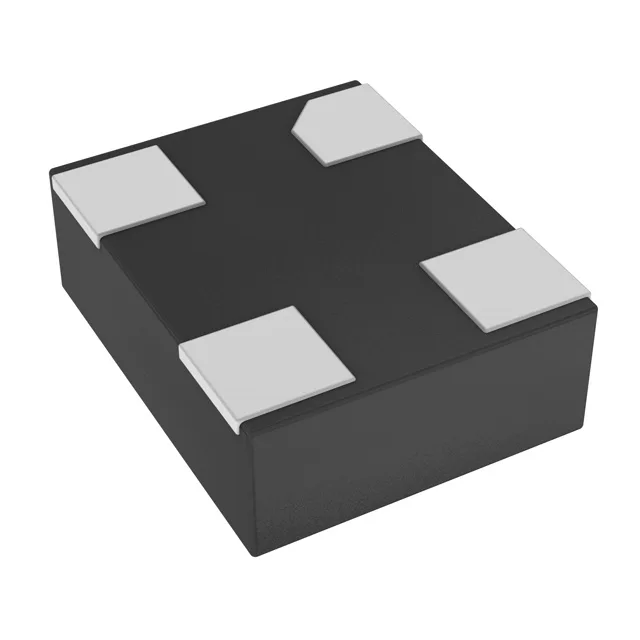
Microchip Technology DSC1030CI1-007.3728T — Crystals & Oscillators

DSC1030CI1-007.3728T MEMS XO, 7.3728 MHz, ±50 ppm, Active

MPNDSC1030CI1-007.3728T
Active

Microchip DSC1030, PureSilicon™ series, XO (Standard), 7.3728 MHz, CMOS output, ±50 ppm stability, 3V supply, 4-SMD no-lead package, active production.

Sourced new & surplus through independent channelsAuthenticity-screened · ESD-safe packingListing updated Aug 2026

Specifications

DSC1030CI1-007.3728T specifications
ParameterValue
TypeXO (Standard)
SeriesDSC1030, PureSilicon™
MountingSurface Mount
Voltage3V
Current - supply3mA (Typ)
Current - supply (Disable)1µA
Frequency7.3728 MHz
Frequency stability±50ppm
Operating temperature0°C~70°C
Size (Dimension)0.126\" L x 0.098\" W (3.20mm x 2.50mm)
Height - seated0.035\" (0.90mm)
OutputCMOS
PackageTape & Reel (TR)
FunctionStandby (Power Down)
Base resonatorMEMS
Case4-SMD, No Lead

Product details

MEMS clock at 7.3728 MHz — what the stability spec means

The DSC1030CI1-007.3728T: A 7.3728 MHz XO with ±50 ppm frequency stability — that is the total variation over temperature, supply, and aging. For a UART baud-rate clock at 115200 bps, ±50 ppm keeps the bit timing error under 0.5%, well inside the 2% margin most UARTs tolerate. The oscillator starts in under 5 ms typical, which matters for a microcontroller waking from deep sleep.

Supply current and standby — power budget fit

Draws 3 mA typical during operation — low enough to share a 3V rail with a low-power MCU without a dedicated LDO. The 3V supply is fixed — not a wide-range input. The rail must stay within 3V ±10 % to guarantee the frequency stability and output swing.

Package and temperature — board-fit constraints

4-SMD no-lead package, 3.20 mm x 2.50 mm footprint, 0.90 mm seated height.

Frequently asked questions

What is the frequency stability of DSC1030CI1-007.3728T?

±50 ppm.

What is the output type of DSC1030CI1-007.3728T?

CMOS output — a rail-to-rail square wave compatible with standard digital logic inputs. No external level translation is needed when driving a 3.3V or 3V MCU clock input.