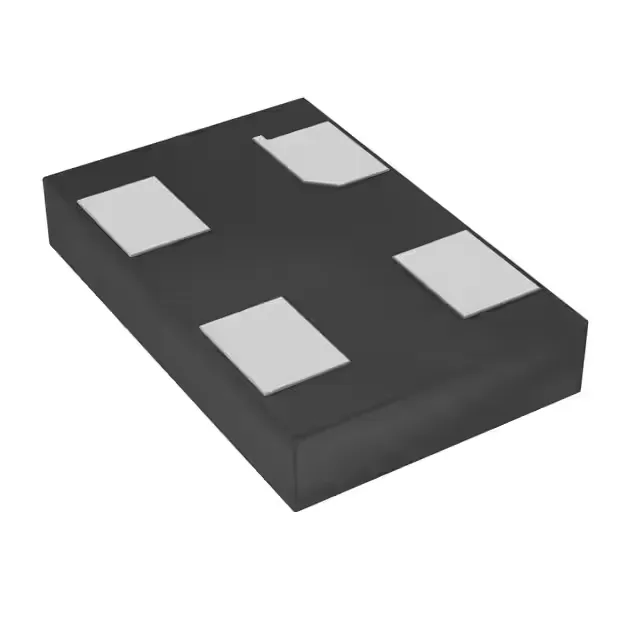
Microchip Technology DSC1030BC1-011.0592 — Crystals & Oscillators

DSC1030BC1-011.0592 MEMS XO – 11.0592 MHz, CMOS, 3V, Active

MPNDSC1030BC1-011.0592
Active

Microchip DSC1030 PureSilicon™ MEMS XO, 11.0592 MHz, CMOS output, 3V supply, ±50 ppm stability, 0°C–70°C, 4-SMD no-lead package

Independent supplier — new & surplus stockAuthenticity-screened · ESD-safe packingListing updated Aug 2026

Specifications

DSC1030BC1-011.0592 specifications
ParameterValue
TypeXO (Standard)
SeriesDSC1030, PureSilicon™
MountingSurface Mount
Supply voltage3V
Current - supply10mA
Current - supply (Disable)1µA
Frequency11.0592 MHz
Frequency stability±50ppm
Operating temperature0°C~70°C
Size (Dimension)0.197\" L x 0.126\" W (5.00mm x 3.20mm)
Height - seated0.035\" (0.90mm)
OutputCMOS
PackageTube
FunctionStandby (Power Down)
Base resonatorMEMS
Case4-SMD, No Lead

Product details

11.0592 MHz MEMS oscillator — fit and sourcing

The DSC1030BC1-011.0592 is a MEMS-based XO (Standard) from Microchip’s PureSilicon™ series, delivering a fixed 11.0592 MHz CMOS output from a 3V supply rail. Supply current maxes at 10 mA, and the standby function (power-down) drops draw to 1 µA — the oscillator can be gated off between UART bursts or sensor reads without a separate load-switch.

The 4-SMD no-lead package (5.00 mm × 3.20 mm, 0.90 mm seated height) is a common footprint shared across many MEMS and quartz XOs — layout reuse is straightforward.

Frequently asked questions

What is the frequency of DSC1030BC1-011.0592?

The oscillator outputs a fixed 11.0592 MHz CMOS signal.

Is DSC1030BC1-011.0592 compatible with a 3.3V supply?

No — the supply voltage is specified as 3V. Operating at 3.3V exceeds the rated voltage and may damage the device or cause frequency drift.

What is the output type of DSC1030BC1-011.0592?

The output is CMOS, making it a direct drop-in for logic-level clock inputs on MCUs, FPGAs, and UARTs.

Is DSC1030BC1-011.0592 a MEMS or quartz oscillator?

It uses a MEMS resonator, not a quartz crystal. MEMS oscillators are inherently more robust against vibration and shock, and they typically have shorter factory lead times.

What does the standby (power down) function do on DSC1030BC1-011.0592?

When the standby pin is asserted, the oscillator stops and draws only 1 µA max. This lets the system gate the clock off between active periods without an external load switch.