1.8432 MHz MEMS clock — what it replaces and why
The 3V supply rail and 3 mA max current draw make it a drop-in for low-power clock trees in MCU-based designs that need a clean square wave at 1.8432 MHz — a common baud-rate reference for UART and SPI peripherals.
It belongs on an indoor PCB in office equipment, appliances, or test gear. Do not spec it into an engine bay, outdoor telecom cabinet, or factory floor where ambient could dip below freezing. Frequency stability is ±50 ppm — tight enough for a 1.8432 MHz reference driving an MCU clock input or a UART without external trimming. For a -40°C environment you would need the industrial-grade variant in the DSC1030 family.
Standby power-down and package fit
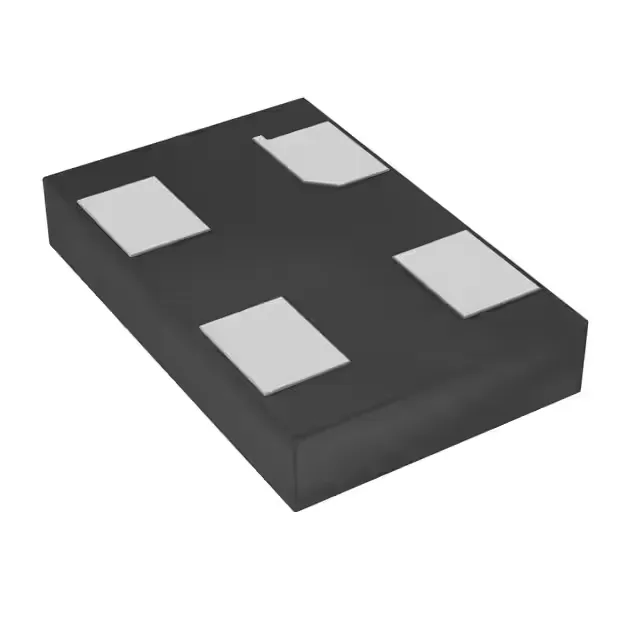
The output goes high-Z in standby, so the downstream clock input needs a pull-down or the MCU's internal weak pull to avoid floating. 4-SMD no-lead package, 5.00 mm x 3.20 mm body, 0.90 mm seated height — a standard footprint shared by many MEMS and quartz oscillators. The land pattern matches the common 5.0×3.2 mm oscillator pad layout; no via-in-pad required.