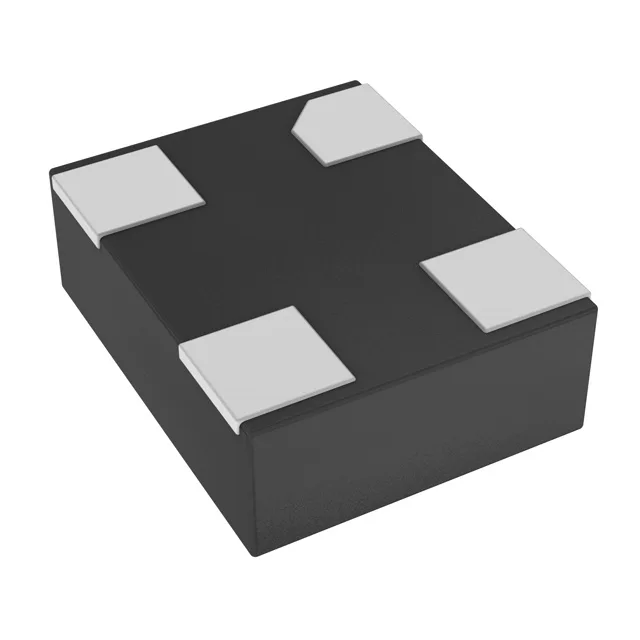
Microchip Technology DSC1003DL2-050.0000 — Crystals & Oscillators

DSC1003DL2-050.0000 MEMS Oscillator 50 MHz CMOS AEC-Q100

MPNDSC1003DL2-050.0000
Active

Microchip DSC1003 series MEMS XO (Standard) oscillator, 50 MHz, CMOS output, ±25 ppm stability, 1.7V–3.6V supply, –40°C to 105°C, AEC-Q100 qualified, 4-SMD no-lead package.

Sourced new & surplus through independent channelsAuthenticity-screened · ESD-safe packingListing updated Aug 2026

Specifications

DSC1003DL2-050.0000 specifications
ParameterValue
TypeXO (Standard)
SeriesDSC1003
MountingSurface Mount
Voltage1.7V ~ 3.6V
Current - supply7.4mA
Current - supply (Disable)15µA
Frequency50 MHz
Frequency stability±25ppm
Operating temperature-40°C~105°C
Size (Dimension)0.098\" L x 0.079\" W (2.50mm x 2.00mm)
Height - seated0.035\" (0.90mm)
OutputCMOS
PackageTube
RatingsAEC-Q100
FunctionStandby (Power Down)
Base resonatorMEMS
Case4-SMD, No Lead

Product details

The 1.7V to 3.6V supply range lets it run from an unregulated battery rail or a 3.3V/1.8V LDO without a separate voltage translator. This is the under-hood temperature band — the oscillator keeps the clock tree alive when the ECU sees 105°C on a summer grade.

Standby power-down for intermittent operation

For a telematics unit that sleeps between ignition cycles, the oscillator's own draw sits below the module's sleep budget — no external load switch needed to disconnect the clock. Active draw is 7.4 mA max at 50 MHz — typical for a CMOS-output oscillator at this frequency. The low disable current means the part can stay powered on the rail and just gate the output, saving a few pennies versus a discrete enable FET.

Compact 4-SMD footprint for space-constrained boards

Housed in a 4-SMD, No Lead package measuring 2.50 mm x 2.00 mm with a seated height of 0.90 mm. No via-in-pad required; two-layer boards fan out easily.

Frequently asked questions

How does this MEMS oscillator compare to a quartz oscillator?

The DSC1003 uses a MEMS resonator instead of a quartz crystal. MEMS parts typically have better shock and vibration tolerance, faster start-up, and smaller package size for the same frequency stability. The trade-off is that quartz can sometimes achieve tighter stability (±10 ppm or better) without a TCXO architecture — but for ±25 ppm and automotive-grade requirements, MEMS is a proven alternative.