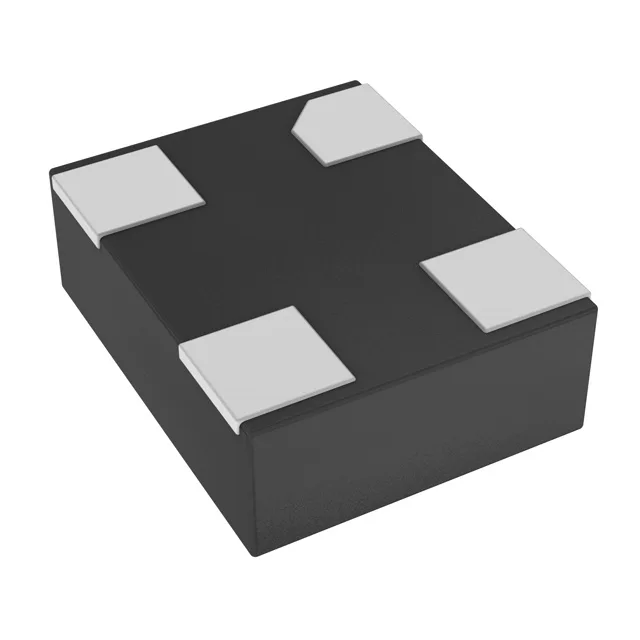
Microchip Technology DSC1001DL5-007.3728T — Crystals & Oscillators

DSC1001DL5-007.3728T MEMS XO – 7.3728 MHz, ±10 ppm, AEC-Q100

MPNDSC1001DL5-007.3728T
Active

Microchip Technology DSC1001 series, XO (Standard), MEMS resonator, 7.3728 MHz, CMOS output, ±10 ppm frequency stability, -40°C to 105°C, AEC-Q100

Independent supplier — new & surplus stockAuthenticity-screened · ESD-safe packingListing updated Aug 2026

Specifications

DSC1001DL5-007.3728T specifications
ParameterValue
TypeXO (Standard)
SeriesDSC1001
MountingSurface Mount
Supply voltage1.8V ~ 3.3V
Current - supply6.3mA
Current - supply (Disable)15µA
Frequency7.3728 MHz
Frequency stability±10ppm
Operating temperature-40°C~105°C
Size (Dimension)0.098\" L x 0.079\" W (2.50mm x 2.00mm)
Height - seated0.035\" (0.90mm)
OutputCMOS
PackageTape & Reel (TR)
RatingsAEC-Q100
FunctionStandby (Power Down)
Base resonatorMEMS
Case4-SMD, No Lead

Product details

MEMS oscillator replaces quartz at 7.3728 MHz

AEC-Q100 qualification for automotive duty

The supply voltage range of 1.8V to 3.3V covers common logic rails; the CMOS output swings rail-to-rail, so no level translation is needed when feeding a 3.3V or 1.8V MCU clock input.

Product status is Active per Microchip's current lifecycle designation. Supplied in Tape & Reel (TR) packaging, 4-SMD no-lead footprint, 2.50 mm x 2.00 mm body.

Frequently asked questions

What is the frequency tolerance of DSC1001DL5-007.3728T?

This is the total variation including initial accuracy, temperature drift, and aging — no external trim capacitor is needed.

Does DSC1001DL5-007.3728T replace a standard 7.3728 MHz quartz crystal?

Yes, it replaces a quartz crystal plus its load capacitors and inverter — the MEMS XO integrates the resonator and oscillator circuit in one package. The CMOS output drives the clock input directly. Pin-compatible with standard 4-pin 2.5 x 2.0 mm XO footprints; verify the enable/disable logic on pin 1 matches your board.

Is DSC1001DL5-007.3728T compatible with 3.3V logic?

Yes. The supply voltage range is 1.8V to 3.3V, and the CMOS output swings rail-to-rail. At 3.3V supply the output high level meets 3.3V CMOS thresholds without a level shifter.