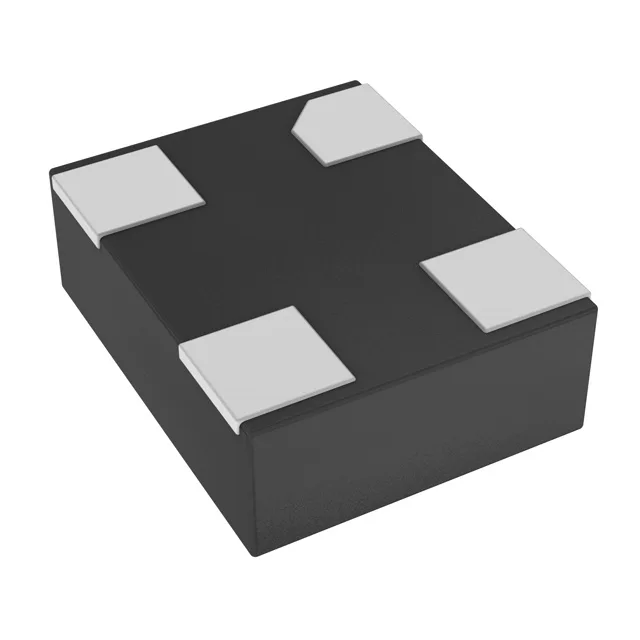
Microchip Technology DSC1001DL2-090.0000 — Crystals & Oscillators

DSC1001DL2-090.0000 MEMS Oscillator 90 MHz CMOS AEC-Q100

MPNDSC1001DL2-090.0000
Active

Microchip Technology DSC1001 series, XO (Standard) MEMS oscillator, 90 MHz CMOS output, ±25 ppm stability, 1.8V to 3.3V supply, -40°C to 105°C, AEC-Q100, 4-SMD no-lead package.

$1.4300Ref. price · indicative, final on quote
Sourced new & surplus through independent channelsAuthenticity-screened · ESD-safe packingListing updated Aug 2026

Specifications

DSC1001DL2-090.0000 specifications
ParameterValue
TypeXO (Standard)
SeriesDSC1001
MountingSurface Mount
Voltage1.8V ~ 3.3V
Current - supply8.7mA
Current - supply (Disable)15µA
Frequency90 MHz
Frequency stability±25ppm
Operating temperature-40°C~105°C
Size (Dimension)0.098\" L x 0.079\" W (2.50mm x 2.00mm)
Height - seated0.035\" (0.90mm)
OutputCMOS
PackageTube
RatingsAEC-Q100
FunctionEnable/Disable
Base resonatorMEMS
Case4-SMD, No Lead

Product details

MEMS oscillator with automotive-grade reliability

The DSC1001DL2-090.0000 is a 90 MHz MEMS-based XO (Standard) from Microchip's DSC1001 series, delivering a CMOS output with ±25 ppm frequency stability across a wide 1.8V to 3.3V supply range. The MEMS resonator eliminates quartz crystal aging and vibration sensitivity issues — a practical advantage for designs that see shock, vibration, or wide thermal cycling.

Power budget and supply flexibility

Maximum supply current is 8.7 mA at 90 MHz, and the disable mode drops to 15 µA — low enough to leave the oscillator powered continuously in a battery-operated system without draining the rail. The 1.8V to 3.3V input range means the same part can be fed from a 1.8V core rail or a 3.3V I/O rail, simplifying BOM consolidation across multi-voltage designs.

Housed in a 4-SMD no-lead package measuring 2.50 mm x 2.00 mm with a seated height of 0.90 mm, the footprint is compatible with standard reflow soldering and fits tight PCB layouts.

Frequently asked questions

Can the DSC1001DL2-090.0000 be used in automotive applications?

Yes — it carries an AEC-Q100 rating, which qualifies it for automotive-grade reliability testing.